National Museum of Korea recasts Korean Empire as modern sovereignty project
The National Museum of Korea's renovated gallery recasts the 1897–1910 Korean Empire as a sovereignty project, featuring rare artefacts and a spatial design centred on imperial symbolism.

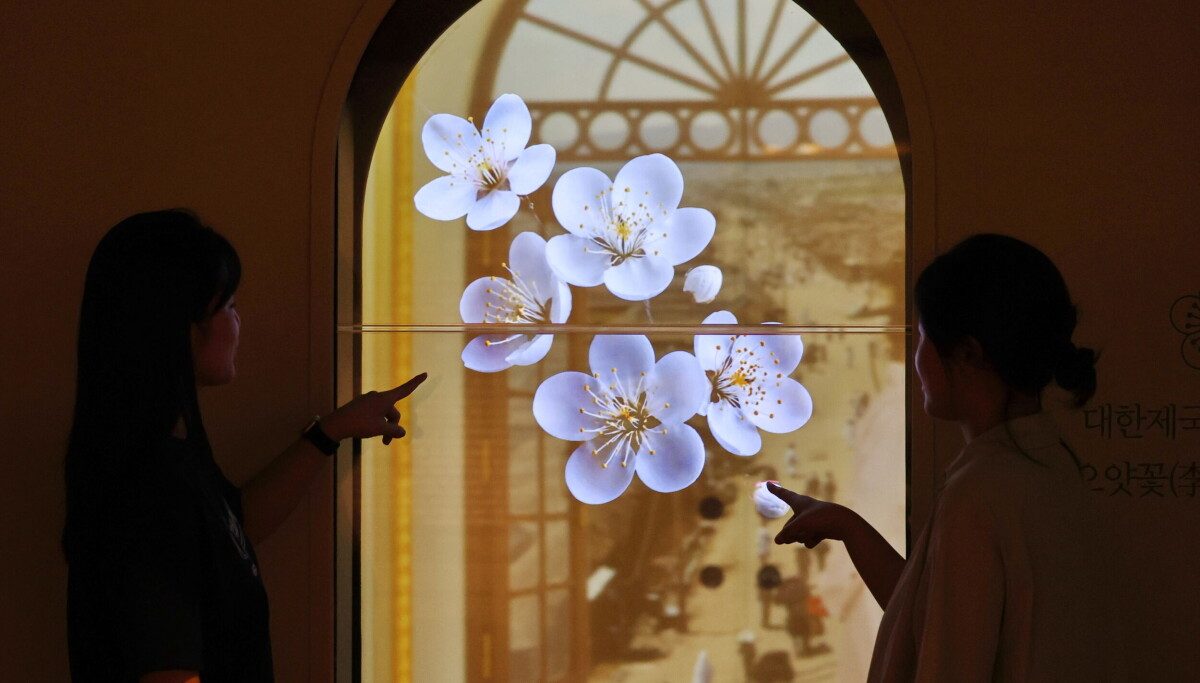
The National Museum of Korea has reimagined how the Korean Empire (1897–1910) is understood, shifting the narrative from a footnote in decline to an intentional claim to modernity. The renovated Korean Empire Gallery, which reopened in late July after a nine-month closure, presents 65 objects—seven designated as national treasures—within a spatial design that mirrors imperial architecture and uses video technology to expand what is a modest 123-square-metre space on the museum's first floor.
Two pieces in particular underscore the curatorial ambition. A bronze ridge-beam inscription and a silver cornerstone plate, both recovered in 1996 from the demolished Japanese Government-General building, had remained in storage for three decades. They carry the names of the men who erected the structure. Curator Seo Yoon-hee framed their display not as commemoration but as witness: "We brought it out because the history of Japanese aggression has to be remembered."
The exhibition design draws from two visual languages: the oyatkkot (plum blossom), which served as the imperial crest, and the neoclassical Seokjojeon hall at Deoksu Palace, whose arches are reproduced in the walls. Five films—created using transparent OLED screens, AI-processed imagery and curved display surfaces—anchor the visitor's journey through five thematic zones: the declaration of empire as sovereignty, administrative and educational reform, newspapers and diplomacy, and finally the loss of sovereignty and resistance to it.
Signature pieces from the National Museum's own collection return after years in storage. The portrait of Emperor Gojong, attributed to painter Chae Yong-sin and created in 1902 for the 40th anniversary of his reign, appears for the first time in seven years. The Denny Taegukgi—the oldest and largest surviving Korean flag—is positioned at the spatial heart, where high walls on either side create a vertical volume that draws visitors' eyes upward before they encounter it. Ahn Jung-geun's calligraphy from 1910 and a 1902 map of Seoul (then Hanseong) showing foreign embassies ringed around Gyeongbok Palace complete the narrative of a kingdom attempting to assert itself within a globalising order.
Museum director You Hong-june emphasised the stakes. "A museum's history exhibition carries more importance and influence than a history textbook," he said. The National Museum's Korean contemporary galleries begin in 1945; the National Museum of Korean Contemporary History picks up from that year. Between lies a 13-year absence. "Many people think the Joseon dynasty ended in 1910, but it did not. Joseon closed in 1897, when the Korean Empire was proclaimed. And still we leave those 13 years as a gap, written off as the stretch in which incompetent ancestors handed the country to Japan." The new gallery repositions those years as a deliberate bid for modernity, not a failure of will.