Artist Nguyễn Thế Sơn on preserving Hanoi’s urban memory through public art
Photographer Nguyễn Thế Sơn examines how Hanoi can preserve urban memory whilst modernising, and why artists must help shape the city's future.

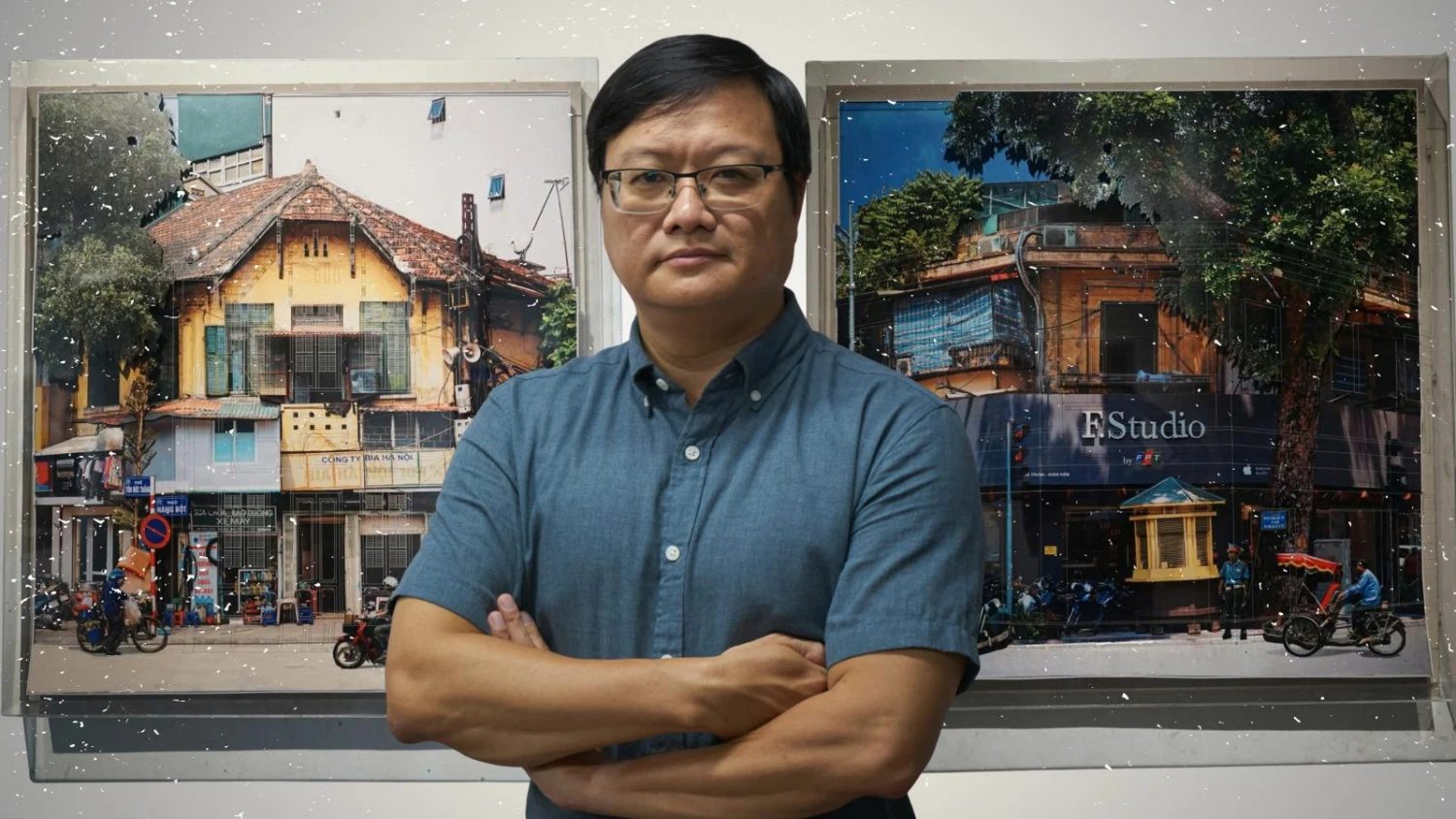
Hanoi is undergoing rapid transformation. Old apartment blocks, street-side tea houses, and familiar alleyways are disappearing, replaced by new developments. Each disappearance erases a layer of the city's collective memory.
Photographer and curator Nguyễn Thế Sơn has spent years documenting this shift through his lens, whilst also researching urban memory and initiating public art projects—most notably the Phùng Hưng and Phúc Tân initiatives—that foster dialogue between art, community, and lived space.
In conversation with Tatler Asia, Sơn addressed how Hanoi can modernise without losing its identity. He observed that cities with deep historical roots—Amsterdam, Paris, Singapore—maintain strict licensing requirements to preserve architectural facades. "The front of a building is considered shared cultural property," he explained. "These cities allow interior upgrades to modern standards, but the building's appearance must remain unchanged. Materials, colours, and renovations follow strict municipal guidelines."
This approach treats urban facades as a city's backbone, a visual anchor for collective memory.
Photography as witness
When asked about the difference between "recording" and "preserving memory" in an era when anyone with a smartphone can capture images, Sơn distinguished between medium and intention. "What matters is not whether you use a phone or a professional camera, but how you approach and interpret what you're photographing," he said.
Architectural photography emerged in 1850 as a formal discipline in France, tasked with documenting building facades systematically. Photography's inherent purpose is to capture lived reality through exposure, but the photographer's intent and interpretation determine lasting value. A document becomes a memory only through deliberate framing.
The artist's voice in urban planning
Sơn advocated for artists to have a seat at the table during Hanoi's renewal projects. Over the past decade, his public art initiatives have shown that creative interventions can activate forgotten spaces and reconnect residents to their surroundings. Yet artists remain largely absent from formal urban planning discussions—a gap he wants closed.
"Cities shape how we live, but we rarely ask the people who understand space and meaning—artists, designers, community members—what they think during development," he reflected. Including these voices, he argued, could transform renewal from erasure into dialogue.