Seoul International Writers’ Festival to Explore Literature and AI
Seoul hosts an international writers' festival from 11–16 September, with 24 authors exploring literature's role amid artificial intelligence.

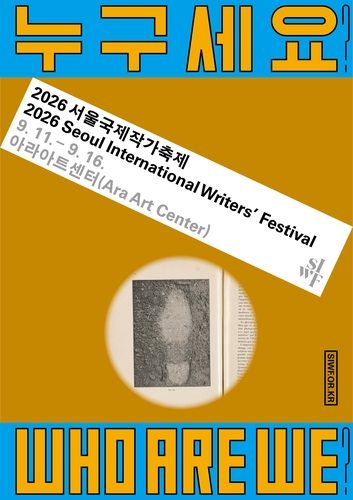
Seoul will host its annual gathering of international writers next month, with organisers positioning the event as a space to examine how literature and human values navigate an era shaped by artificial intelligence.
The Seoul International Writers' Festival runs from 11 to 16 September at Ara Art Center in central Seoul, according to the Literature Translation Institute of Korea (LTI Korea). The festival will feature 24 participating writers across roughly 20 programmes, blending talks, readings and panel discussions in both physical and online formats.
Kim Ae-ran, one of South Korea's most celebrated contemporary writers, and Benjamin Labatut, the Chilean author of "The Maniac" and "Phantom Plague," will co-headline the opening session titled "We Are Someone." The festival's overarching theme, "Who Are We," frames questions about identity and creative expression as AI reshapes cultural production.
Other confirmed participants include Korean authors Lee Seung-u, Moon Ji-hyuck and Yeh So-yeon; Taiwanese novelist Chen Xue; Canadian poet Emily Jungmin Yoon; and Japanese novelist Keiichiro Hirano. The programming will include conversations between novelists, graphic artists, translators and readers, designed to bridge literary communities across Asia and beyond.
The festival arrives as South Korea's publishing sector experiences renewed momentum. Seoul's International Book Fair, held earlier this year, drew record attendance, while Korean literature in translation has gained international prominence—most recently with Han Kang's Booker Prize win in 2024. By positioning writers as cultural interpreters of technological change, the festival signals how literary events in Asia are expanding beyond traditional author panels to address urgent contemporary concerns. The emphasis on in-person and online sessions also reflects post-pandemic programming norms now standard across Asia's cultural institutions.