The Fabric Thanh Lam Carries Onto Every Stage
Tonight she performs with a European symphony orchestra in Bucharest. On 1 September in Singapore, she will take the stage under her own name alone. On both occasions, she will wear fabric that was woven and embroidered by hand in Vietnam.


Tonight she performs with a European symphony orchestra in Bucharest. On 1 September in Singapore, she will take the stage under her own name alone. On both occasions, she will wear fabric that was woven and embroidered by hand in Vietnam.
Most Asian music reaches the world through an established export system: a record label, a touring division, a rights infrastructure, and a promotional apparatus that arrives well before the artist does.
Vietnam has very little of that machinery. So when a Vietnamese voice steps onto a European concert stage, it arrives by a different route, and it carries different things with it.
At seven o’clock tonight, Bucharest time, the People’s Artist Thanh Lam will step out in front of the Bucharest Symphony Orchestra at the Romanian Athenaeum. The hall opened in 1888 beneath a dome ringed by a continuous fresco, and it remains the resident home of the George Enescu Philharmonic. This is the twelfth edition of the Cello Fundamento concert series, and the first time it has been staged outside Vietnam.

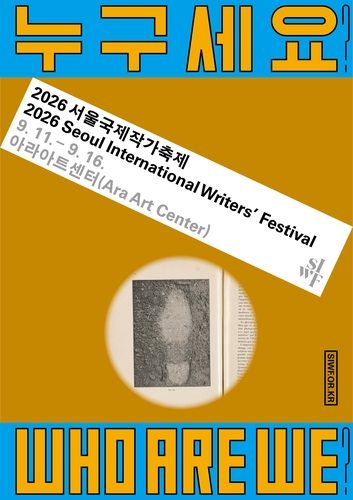
Two weeks from now, on 1 September, she will appear on a very different kind of stage: the University Cultural Centre Hall at the National University of Singapore. The concert, titled Thanh Lam and Friends, has no host orchestra, no accompanying fashion collection, and no anniversary to mark. It rests on her name alone, and on the people willing to pay to hear it.
At the age of 57, few Asian artists still take on both kinds of engagement in a single summer. What allows her to do so is not an export strategy, because no such strategy exists for her. What travels instead is a voice that is genuinely difficult to imitate, and a stage image she has built over many years from Vietnamese fabric: brocade, raw silk, hand weaving, and hand embroidery, made up by designers working at home.
The Difficulty of Tonight
Singing with a symphony orchestra is a different discipline from singing with a band, and the distance between the two is greater than most audiences realise.
With a band, the singer sets the pulse and the musicians follow her lead. With an orchestra, the piece exists as a complete score before she ever opens her mouth. Every section has its part written out, every bar belongs to the conductor, and the voice must arrive precisely where it is expected. There is little room to stretch a phrase by instinct, and none to change course midway. For a singer who has built her career on instinct, this kind of discipline runs against the grain.
The official poster lists her among the principal artists, alongside the cellist Dinh Hoai Xuan and the PlaCello ensemble, under the orchestra’s name. Dong Quang Vinh and Bogdan Postolache share the conducting duties. According to the organisers, around 75 musicians will appear on stage, including a group of 22 flown in from Vietnam, and sponsorship discussions were still ongoing as the concert date approached.
By the series’ own account, Cello Fundamento traditionally closes its concerts with Vietnamese folk songs arranged for symphony orchestra, and in earlier editions these arrangements were written by Romanian musicians.
Bucharest is not new territory for her. Between 1985 and 1991, as a singer with the Central Light Music Ensemble, she toured a long list of countries, and Romania was among them. Four decades later, she has returned, this time standing in front of the city’s own orchestra.
A Trained Voice
She is the daughter of the composer Thuan Yen and the traditional musician Thanh Huong. She studied voice at the Hanoi Conservatory and, from 1985 to 1991, sang with the Central Light Music Ensemble, touring several European countries during those years, Romania among them.
Hers is a mezzo voice, thick and powerful. Critics have long credited her as the first to bring soul and R&B vocal runs into Vietnamese popular music, sung in Vietnamese, and as an artist whose phrasing has shaped the generations of singers who came after her.
Her most recent album shows that she is still working, rather than resting on her back catalogue. Cuon Phim, her twenty-fourth album, was released in March 2025 and holds twelve songs written by the composer Nguyen Vinh Tien between 2012 and 2022, marking thirty-five years of her career. She sings nine of the songs alone and invited Tung Duong, Ha Tran, and Ali Hoang Duong to join her on the others. The arrangements move across world music, jazz, and contemporary folk traditions. In January 2026, the record received the Vietnam Musicians’ Association’s 2025 prize.
What stands out is that she chose to set aside the very quality that built her reputation. Speaking about the album, she said the goal this time was to stop singing about pain.
“Khong hat ve noi dau nua” — no more singing about pain.
Thanh Lam, on the album Cuon Phim
Thirty years of her reputation rested on singing pain until it became uncomfortable to hear. Setting that aside was a professional decision, not simply a change of mood. When the album received its award, she said that what she had wanted, this time, was to hold on to the quieter, more fragile moments of ordinary life.
Ha Tran, one of the three guest singers on the album, has said that Thanh Lam is the artist she duets with most easily. In a scene where singers of the same generation rarely perform together, that is a meaningful statement, not a courtesy.
An Identity Woven by Hand
On the Singapore poster, she wears a long black coat with a standing collar, its panels pieced together from woven cloth patterned in red and deep violet, photographed beside a piano. No label is visible anywhere on the garment. Nothing she is wearing competes with her face.
This is not a choice made for one particular night. For years, her stage clothes have come from Vietnamese designers and have almost always been built from handmade material: brocade woven by ethnic minority communities, raw silk, cloth from hand looms, and embroidery done by craftspeople in traditional trade villages. While most artists in the region build an international image around European luxury fashion, she has built hers around the textiles of her own country, cut into modern shapes rather than historical ones.
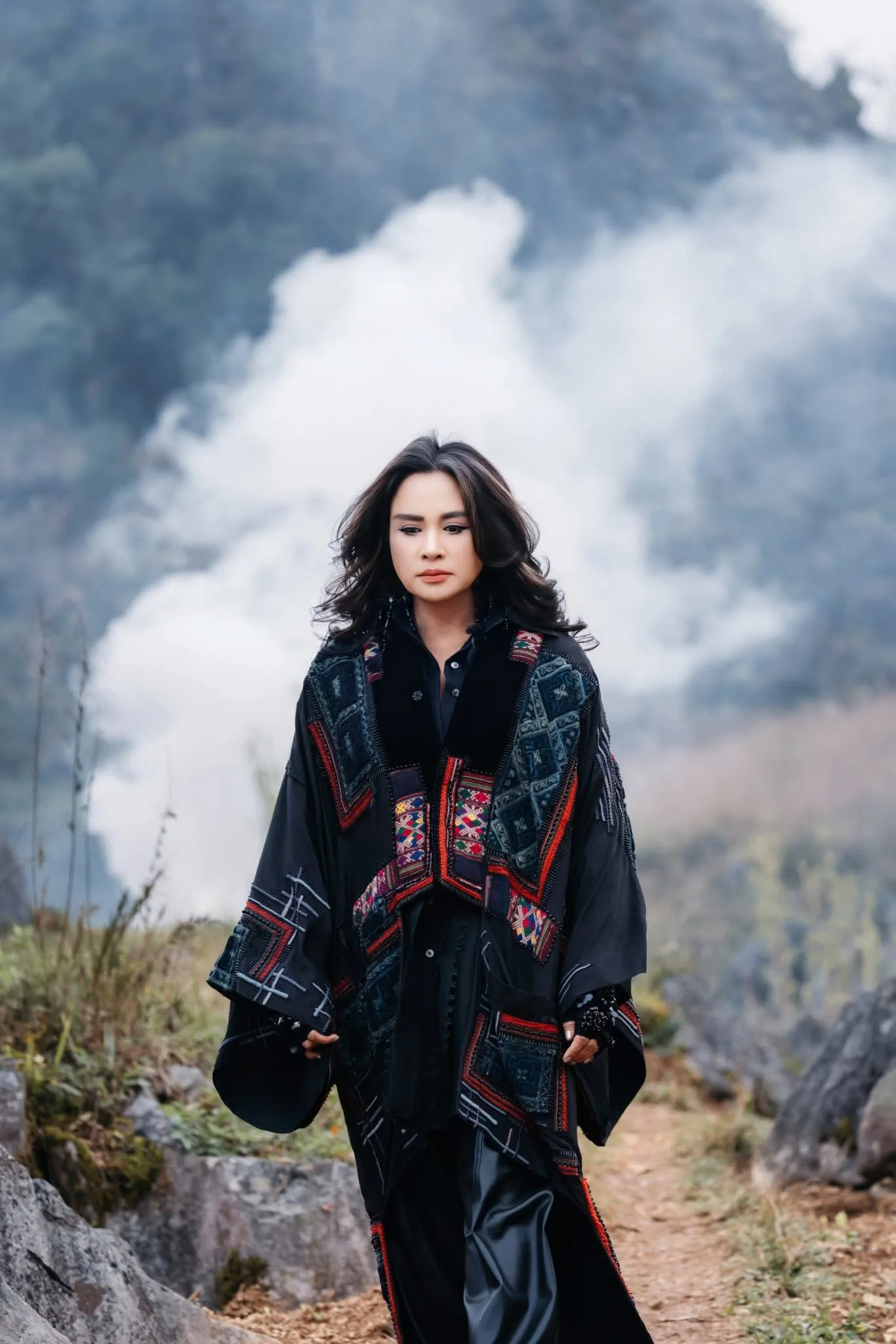
The designer she has worked with most consistently in this direction is Minh Hanh, widely regarded as the person who first brought ethnic minority brocade onto Vietnamese and international runways. Describing her own approach, Minh Hanh has said that what she looks for is not simply beautiful material, but the stories carried by each handmade object.
The relationship runs in both directions, and that is worth noting. In November 2023, at Vietnam International Fashion Week, Thanh Lam herself walked the runway in a collection built from highland textiles, including pieces of century-old brocade recovered from antique garments and set against contemporary fabric. For a singer to model handwoven cloth in this way is a statement about the value of that cloth, not simply a photo opportunity.
On 17 June, that position was placed in its proper setting. At UNESCO headquarters in Paris, as part of a cultural programme called Dao Hoc staged alongside the eleventh session of the General Assembly of States Parties to the 2003 Convention on intangible cultural heritage, she sang rearranged songs about Hanoi while wearing a collection made from brocade of the northwest, of A Luoi, and of the central highlands, together with Vietnamese silk. Minh Hanh directed the staging.
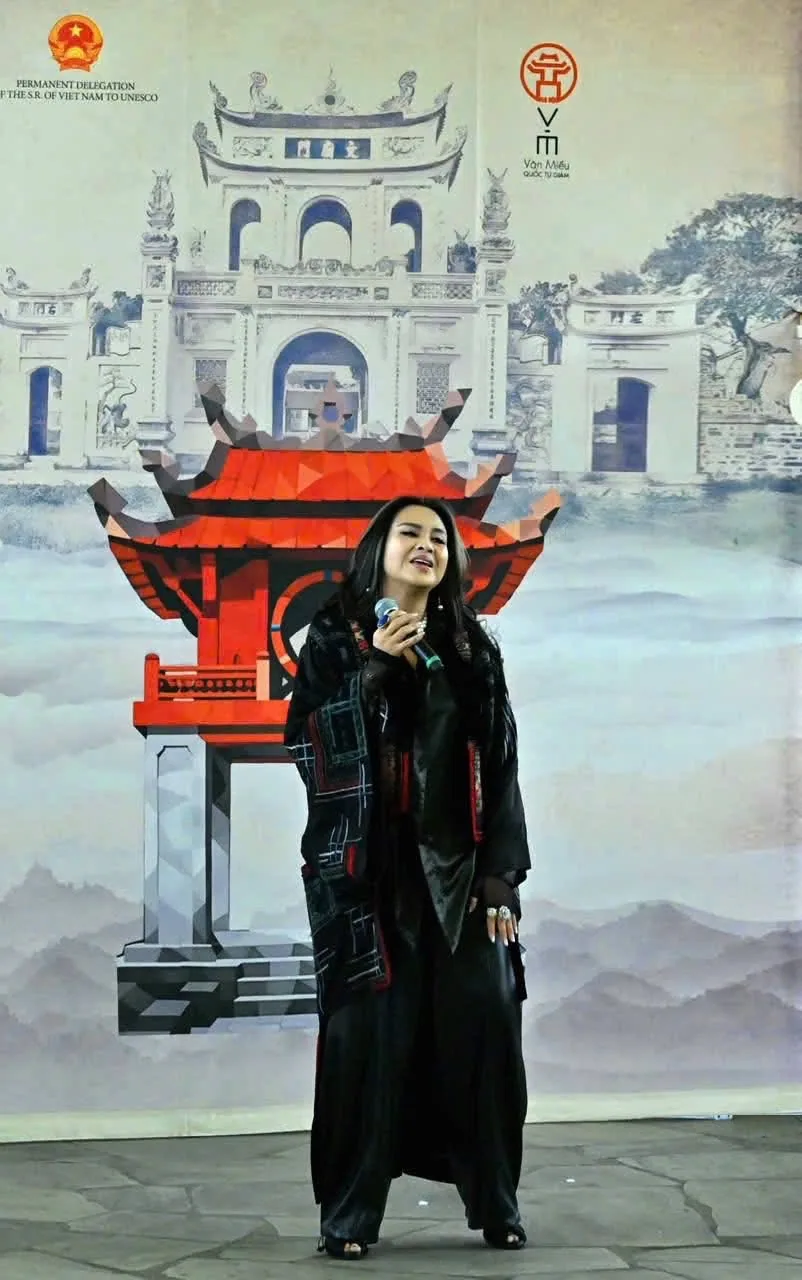
Photographs from the event show that her role there was to sing in support of the ao dai presentation. For a voice known for overwhelming whatever material it is given, choosing to step back so that the cloth could be seen was itself a deliberate decision.
The consequence of this choice can be measured at the weaving end of the chain. Every collection that reaches an international stage represents an order placed with trade villages and highland weaving groups, and one more occasion on which their patterns are seen by an audience that will likely never visit their villages. Hand weaving survives only where someone is willing to pay a price that keeps the weaver working. A coat worn on the Athenaeum stage does not solve that problem by itself, but it forms one link in the same chain.
On 1 September, Her Name Is the Programme
The University Cultural Centre Hall sits on the Kent Ridge campus and seats a maximum of 1,710 people, according to the university’s own technical specifications. It was the venue for the state memorial service of Singapore’s founding prime minister, Lee Kuan Yew, in 2015. It is not a room that gets rented casually.
That evening will run on entirely different economics from the other two engagements this summer, which is perhaps the most interesting part of it. In Paris and Bucharest, institutions and sponsors cover the cost. At Kent Ridge, the audience pays for its own tickets, one at a time, in advance, through Sistic.
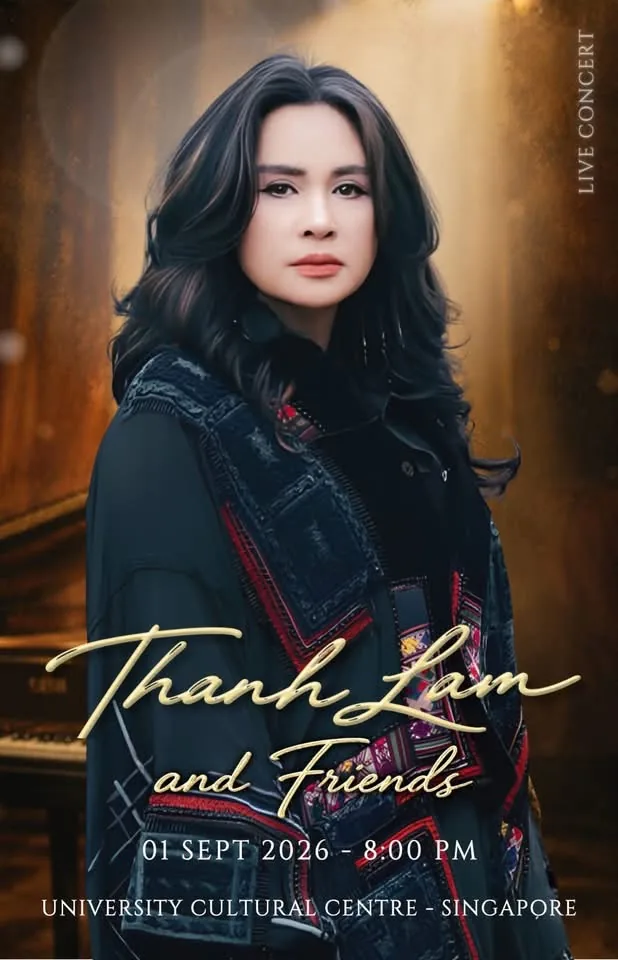
It is the only real test of the harder question underlying her summer: whether a Vietnamese name, attached to no anniversary and preceded by no promotional campaign, can fill a seventeen-hundred-seat hall in another country.
The audience is expected to be largely Vietnamese, drawn from Singapore and the wider region, a community with few opportunities to hear a leading Vietnamese voice in a hall with proper acoustics. One evening on a university campus does not amount to a tour, but it will be a meaningful evening on its own terms.
Behind the Name
Coverage of an artist usually stops at the artist, though the consequences of her choices extend well beyond her.
The twelve songs on Cuon Phim were written over the course of a decade and remained unrecorded until she chose to record them. Without that choice, ten years of one composer’s writing would have stayed on paper. Three guest singers gained a recording credit as a result, and the arrangers involved were paid for their work.
On 5 August, at a concert in Hanoi built as a hybrid of training and performance, she both sang and offered live critique to young singers after each of their numbers, addressing vocal technique, phrasing, and stage presence. This is the kind of teaching normally associated with a conservatoire, carried out here inside a privately produced show, by someone under no obligation to do it.
Her younger brother, Tri Minh, is among the figures who helped bring electronic music into Vietnamese artistic life. Across three generations, the family has approached the same underlying question from three different angles: what to preserve, and what to trade away.
What Remains Unanswered
The repertoire she carries abroad consists largely of her father’s songs and songs about Hanoi. There is no national archive documenting how she sings them, no registered reference arrangement, and no one who has been designated to sing them after her.
For the moment, that particular way of singing exists in only one place: inside the person doing it.
Tonight in Bucharest, the orchestra belongs to the city, the hall belongs to the city, and the voice comes from somewhere else entirely. In two weeks, at Kent Ridge, there will be only a name on a poster. No one has yet said who will stand there after her.