Jimmy: Yashaddai Owens’ Impressionistic Baldwin Portrait
Yashaddai Owens' 68-minute debut trades dialogue for atmosphere, following Baldwin through Istanbul and Paris in monochrome 16mm.

Nearly two years after its Telluride premiere, Yashaddai Owens' directorial debut finally reaches American audiences—a film that defies easy categorisation. Not quite documentary, not quite biopic, Jimmy occupies an oblique space between narrative feature and photographic meditation, anchored by actor Benny O. Arthur's portrayal of James Baldwin during his European travels.
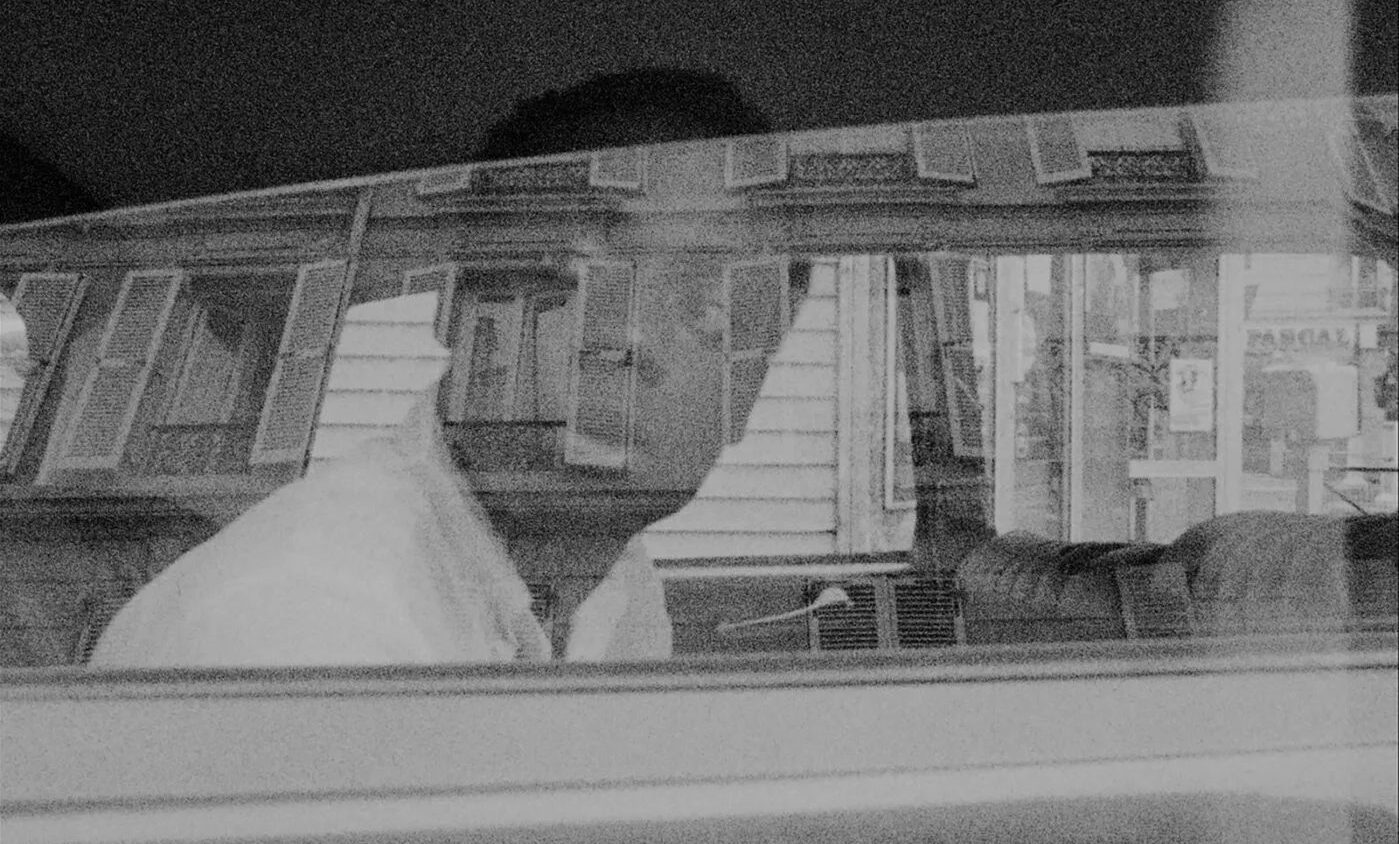
The film opens wordlessly in Istanbul, where Owens' monochrome camera, shot on Bolex 16mm, assumes Baldwin's perspective rather than depicting him directly. For the first ten minutes, the author remains an invisible protagonist as viewers navigate the chattering streets and rural paths of a city Baldwin visited repeatedly in the 1960s. Owens' photographic eye for faces and urban tableaux transforms what might be mere travelogue into something more precise—a visual essay anchored by Paco Andreo's restless jazz score, which pulses with jittery bebop rhythms that refuse to settle.
Arthur materialises only when Baldwin relocates to Paris, his resemblance to the author heightened by Owens' bleached, grain-heavy 16mm aesthetic. Dressed in high-waisted, cinch-backed khakis that hint at mid-century authenticity whilst shot against contemporary backdrops, Arthur inhabits Baldwin through body language rather than dialogue: a quick, alert stride; the posture of an independent outsider; moments of hunger and willing sexuality glimpsed in flirtations with other men in the Algerian quarter. Sometimes he dissolves entirely into shadow or translucent reflection, merging with the city's fabric.
Finding Voice Through Silence
Owens' approach risks overextending its impressionistic premise. At just over an hour, the film's refusal to explain Baldwin—to contextualise, to historicise—leaves viewers unmoored. Compared to works like Raoul Peck's I Am Not Your Negro, which grounds Baldwin's life in textual and historical specificity, Jimmy aims to channel his aura rather than illuminate his significance. Yet an arc emerges from the jagged rambling: Baldwin gradually finds not just his footing in Paris, but his voice. Andreo's cascading score pauses. The amplified scritch of pencil on paper becomes audible.
In its final minutes, Jimmy breaks its self-imposed silence. Arthur reads from Baldwin's 1972 work No Name in the Street, bringing language to what Owens has otherwise conveyed through sensory experience. "My history in the West had, for its daily effect, placed me in such mortal danger that I had fled, all the way around the corner, to France," Baldwin says. The words arrive as corrective: this is not escape, but confrontation. Owens' lustrous European tour collapses into its true subject—the othering and alienation that Baldwin encountered everywhere, even in the cities where he sought refuge.
Strand Releasing presents the film, which runs 68 minutes and was reviewed after its New York and Telluride festival screenings.