Idan Chiang on collecting and curation: how Asian luxury homes are rewriting the rules
Idan Chiang, creative director of L'atelier Fantasia, on why collectible furniture and artist vision are reshaping Asia's approach to luxury homes.

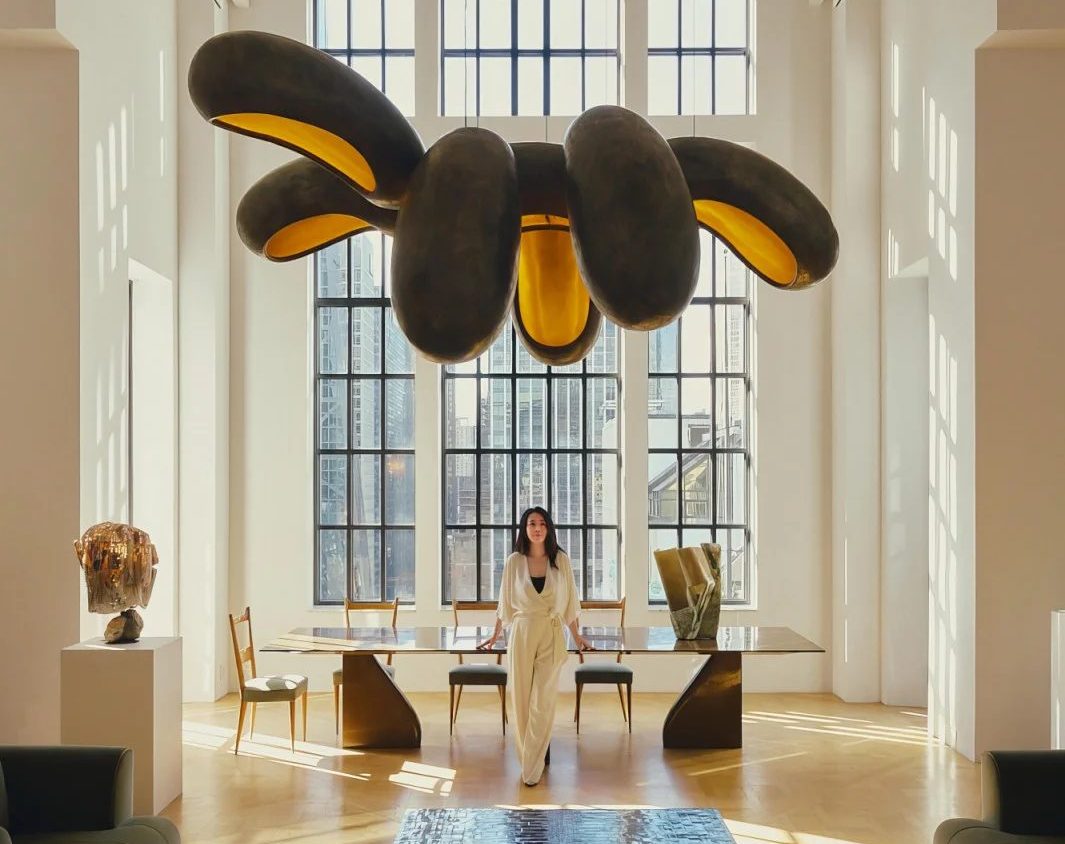
Luxury living in Asia is undergoing a profound shift. Where prestige once meant displaying recognisable brand names, a new generation of collectors is chasing something deeper: the stories behind objects, the philosophy of their makers, and the cultural weight they carry.
Idan Chiang, creative director of L'atelier Fantasia, sees this change as inevitable. "The value of a home today is reflected through cultural depth, personal imprint, and the stories preserved in each work," she says. Contemporary interior design, in her view, has moved far beyond simply furnishing a beautiful room. Each project crystallises memory, lived experience, and the values a homeowner chooses to protect. The result is a living environment with its own distinct character.
This shift mirrors a trend that emerged in Europe and North America years ago but is now taking root across Asia. The luxury residential market on the continent is entering what Chiang calls a new chapter of spatial aesthetics, one where collecting mindset holds central stage.
When furniture becomes art
To understand collectible furniture today, Chiang points to 1960s and 1970s France, when artists Claude and François-Xavier Lalanne began weaving sculptural language into everyday living. A chair bore the gestures of sculpture; a lamp told its creator's private story. These works existed both as functional objects and as independent artworks—a radical reframing of what furniture could be.
Galleries like Carpenters Workshop Gallery, which Chiang has visited in New York, continue this lineage. Here, furniture is approached as a creative form with collectible value: limited editions, distinct personal signatures, and tight connections to the international art market.
The distinction between traditional luxury furniture and collectible pieces, Chiang argues, has never really been about price. "A sofa worth millions of Taiwan dollars can still be produced through industrial process," she explains. "But an art furniture work always carries the thinking, perspective, and signature of its creator. That value cannot be replicated."
A 2023 auction exemplified this: François-Xavier Lalanne's "Hippopotamus Bar" sold for a record $31.4 million at Sotheby's New York, becoming the most expensive design work ever hammered at auction—a testament to how far the market will reach for authentic artistic vision.
The voice of the object
For years, furniture was judged by usefulness. But in collectible work, value lies elsewhere. What makes a piece memorable is not comfort alone—it is the ability to transmit the maker's creative philosophy and worldview.
"Each object has its own voice," Chiang reflects. "When selected and placed in a specific position within a space, it begins to participate in a dialogue between people and place."
Chiang believes ceramic vessels—those carrying historical, cultural, and artistic resonance—are key elements in interior design. They embody art, mirror the collector's personality, and reveal their curatorial perspective. In spaces that now function as galleries as much as homes, such pieces anchor the narrative.
This reorientation marks a maturation of taste. Aesthetics are no longer expressed through the ability to own luxury brands, but through the discernment to choose and connect values of personal significance. In a market where authenticity commands premium, the artist's hand—and the story behind it—has become the true currency.