BTS Arirang World Tour: Where Korean Heritage Meets European Tailoring
BTS transforms the Arirang World Tour into a fashion event by blending Korean heritage with punk edge and bespoke European luxury across seven distinct visual narratives.

The BTS Arirang World Tour has become a masterclass in how heritage and rebellion can coexist on stage. Across international venues, the seven members have paired traditional Korean garments with aggressive streetwear silhouettes and custom European tailoring, transforming each performance into a fashion statement that extends far beyond standard concert wear.
The creative vision underpinning the tour's visual identity draws from two distinct narratives: the warrior legacy of Korea's Joseon dynasty, filtered through a contemporary punk ethos. Leather, metal hardware, and dark, austere palettes—black, white, deep red, indigo and subtle purple—form the backbone of the aesthetic. Rather than default to generic performance costumes, the members leveraged their global ambassador status to commission bespoke collections from some of the world's most recognised fashion houses: Songzio, Juntae Kim, Balenciaga, Gucci, Dior, Celine, Louis Vuitton and Givenchy.
Key Performances, Key Looks
At the Gwanghwamun ceremony marking their return after military service, Songzio's creative director Jay Song presented what he called "Lyrical Armor"—deconstructed blazers with soft sleeves, asymmetrical ties and exposed seams. Paired with wide-leg trousers, the silhouette echoed a modern interpretation of Joseon warrior dress, a visual anchor for the entire tour.
Juntae Kim's opening-night designs for the Goyang show eschewed lightness altogether: dark, angular tailoring with meticulous hand-beading and pronounced silver metal accents conveyed punk defiance without sacrificing Korean craft heritage. The collection proved that streetwear could speak the language of rebellion and refinement simultaneously.
For the Paris leg, Jungkook cycled through a range of Balenciaga pieces: a black motorcycle leather jacket layered with multiple belts, oversized Venom boots, cat-eye sunglasses and a distressed hoodie. The versatility underscored how luxury houses can serve an idol's mobility across different stage moments.
V, as a global ambassador for Celine, navigated a subtler terrain—bespoke leather coats embroidered with gilt military insignia, leopard-print leather textures, zebra-pattern velvet, soft silk scarves. Rock and roll aesthetics met classical tailoring, a balance that reflected the brand's understated Parisian codes.
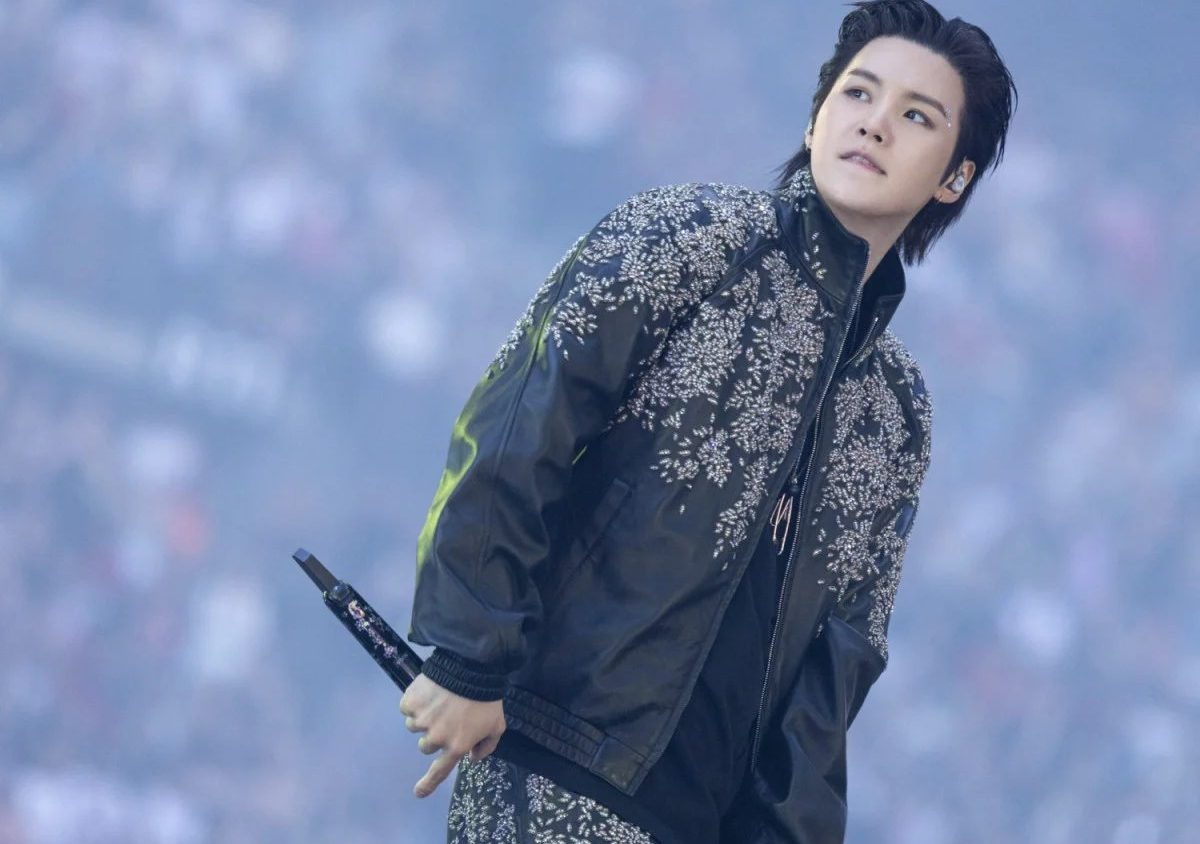
J-hope's Louis Vuitton varsity blazer, encrusted with Swarovski crystals, sat above wool pleated trousers in beige and signature LV combat boots—a collision of street energy and meticulous craft. Jimin layered a Dior brick-coloured leather jacket over a silver lurex knit, finished with loose cotton trousers, while Suga's Givenchy choices remained grounded in dark, architectural precision.
What distinguishes the Arirang tour's approach from prior idol styling is its refusal to code-switch between heritage and modernity. Instead, each look proposes that hanbok's structural logic—its layering, its balance, its formality—can speak fluently to contemporary menswear codes: oversized tailoring, stark geometry, aggressive hardware. The result is neither costume nor casual wear, but a third language that speaks to a global, design-literate audience.