Asia’s Running Clubs Are Quietly Replacing the Bar and the Dating App
Across Asia's cities, free weekly running clubs are quietly becoming where people meet, connect, and stay, filling a social gap the bar and the dating app left behind.

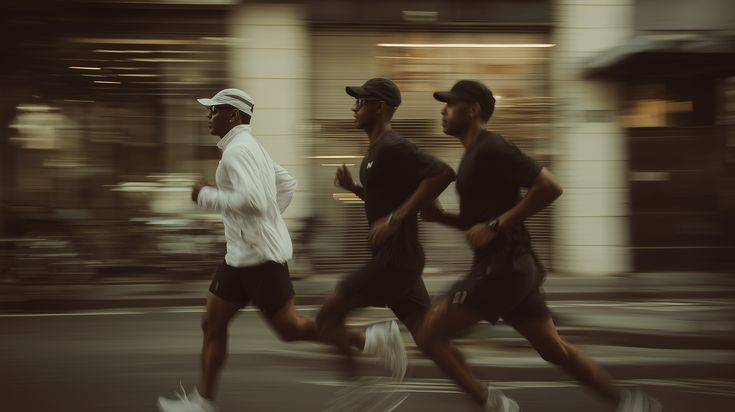
On a Tuesday evening in Singapore, a group of about forty people gathers outside a café near the river. Some arrive in office clothes, peeling off blazers to reveal running gear underneath. Others come straight from home, earphones in, already loosening their calves against the curb. They do not all know each other. By the end of the night, most of them will.
This scene now repeats itself across the region: in Bangkok parks at dawn, along Seoul's Han River at dusk, on the reclaimed waterfronts of Jakarta and the harbor paths of Hong Kong. The format is almost always the same. A free weekly run, a fixed meeting point, a distance gentle enough that conversation survives it, and a stop afterward for coffee or a meal. What looks like a fitness activity functions, increasingly, as something else: a way for people to find other people.
The appeal of a low-stakes introduction
Much of the draw comes from what a run is not. It is not a date, with its scripted pressure to impress. It is not a networking event, where everyone is quietly trading business cards. It is not a night out built around alcohol. A run gives strangers a shared task and a reason to be standing next to each other, which removes the hardest part of meeting someone new: figuring out what to do with your hands and your opening line.
There is also a rhythm to it. Talking while moving is easier than talking across a table. Eye contact is intermittent. Silences feel natural rather than awkward, because you can always blame the pace. People who describe themselves as shy often say a run is the first social setting in years where they have made friends without effort.
A response to how cities feel now
The rise of these clubs sits against a wider backdrop. Across many of Asia's largest cities, adults report spending more of their social lives on screens and less of it in person. Remote and hybrid work removed the casual contact that offices once supplied. Dating apps, for all their reach, leave many users tired of swiping through profiles that never become plans.
Running clubs offer the opposite proposition. The commitment is small, a couple of hours a week, but the contact is real. You see the same faces repeatedly, which is how acquaintances slowly become friends. The repetition matters. A single event rarely produces a relationship; a weekly ritual often does.
Where the community lives between runs
The physical run is only half of it. Most clubs are organized through group chats and social feeds, where photos from the previous session circulate, routes for the next one get posted, and conversations continue long after everyone has gone home. The online layer keeps the group warm between meetings, and the offline layer gives the online chatter something to be about. Each feeds the other.
This is part of why the clubs have spread so quickly. Starting one requires almost nothing: a place to meet, a regular time, and a few people willing to show up consistently. Many began as small groups of friends and grew through word of mouth and a single shared post.
The quieter outcomes
Members talk about the obvious benefits, fitness and routine, but they tend to dwell longer on the social ones. People have found flatmates, business partners, and friends who outlast their reason for joining. Some clubs have become informal support systems, the place where members hear about job openings or get help moving apartments. Romance happens too, though most organizers are careful not to market the clubs that way, aware that turning a run into a singles event would change its character.
There are limits worth naming. The clubs skew toward people with time and disposable income, and toward those already comfortable enough to walk up to a crowd of strangers. Not everyone finds a place in them. But for a generation that has grown wary of how it spends its social energy, a free weekly run has turned out to be a surprisingly durable answer to an old question: how do you meet people you actually want to keep seeing.
The answer, for a growing number across the region, is that you lace up your shoes and show up. The friendships follow at their own pace.