Korean hotels embrace storytelling as wedding bookings surge
South Korea's luxury hotels are reinventing wedding experiences through immersive design and light-based storytelling, capitalizing on a rebound in marriage registrations.

South Korea's wedding market is heating up. According to Statistics Korea, marriage registrations climbed to approximately 240,000 couples in 2025, an 8.1 percent increase from the previous year. Through April 2026, the momentum continued with 82,931 marriages registered, up 6.8 percent year-on-year.
Hotels are capitalizing on this rebound by rethinking what a wedding venue can be. Rather than leaning on conventional luxury—towering floral arrangements and premium service alone—luxury properties across Seoul and Incheon are now positioning themselves as storytellers, crafting narratives through light, design and carefully choreographed guest journeys.
The shift in focus
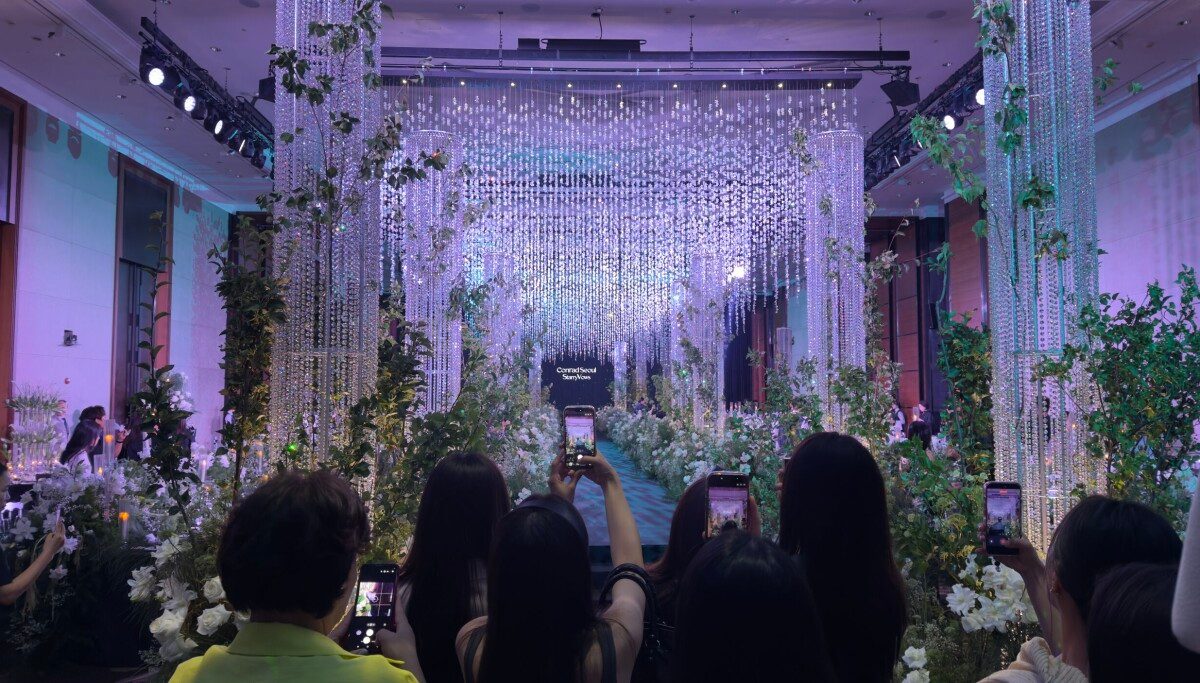
Conrad Seoul's recent "Starry Vows" showcase, held on 24 July in Yeouido, exemplifies this evolution. The venue's seven-meter-high Grand Ballroom featured more than one million crystals suspended from the ceiling, designed to evoke a starry night sky. But the experience began before guests entered the ballroom. Upon arrival, they were greeted with canapés and cocktails in the reception area, then guided through a newly repositioned bridal suite situated beside the reception space—a deliberate choice to allow family and friends closer moments with the bride before the ceremony.
Choi Jong-eun, head of weddings at Conrad Seoul, described the concept: "'Starry Night' fills the venue with the glow of starlight, making the start of a couple's new journey even more radiant." The showcase included a bridal fashion presentation featuring gowns in white, pink and mint, followed by a customizable wedding course menu centred around king crab, steak and chocolate gâteau.
Light as narrative device
Across Seoul's luxury hotel sector, light has emerged as the defining theme of 2026's wedding concepts. Rather than serving as mere decoration, it functions as a storytelling mechanism that structures the entire event.
Sofitel Ambassador Seoul's "Le Jardin Doré" showcase drew guests through a Parisian garden narrative—beginning in sunny afternoon light, transitioning through golden hour and culminating in deep blue night. A Sofitel representative explained the approach: "Instead of simply decorating the venue, we focused on creating a distinctive atmosphere, one unique to Sofitel Seoul, by centring the experience on the passage of time and the changing flow of light."
Sheraton Grand Incheon's "Under the Milky Way" concept, launching on 9 August, similarly uses light as its central device. JW Marriott Hotel Seoul has taken a contemporary approach with "Art – Contemporary Wedding Experience: The Botanical Edit," emphasizing botanical floral art as part of its design vocabulary.
Why the shift matters
Samuel Peter, general manager of Conrad Seoul, articulated the philosophy guiding these venues: "It's all about celebrating and cherishing moments that will last a lifetime." For couples, this means weddings tailored to their personal narratives rather than a standardized luxury package. Customization—from menu structure to design elements—signals a move toward intimacy and individuality within an upscale framework.
With marriage numbers climbing steadily since 2023, competition among premium venues has intensified. Hotels understand that affluent couples increasingly seek experiences that reflect their identity and values. Immersive design, personalized journeys and thematic coherence serve that demand far more effectively than florals alone ever could.