
Worms and Microbes Emerge as a Cheaper Fix for Dairy Farm Pollution
California dairy farmers are using earthworms to clean manure wastewater, while solar geoengineering research runs into costly engineering limits.

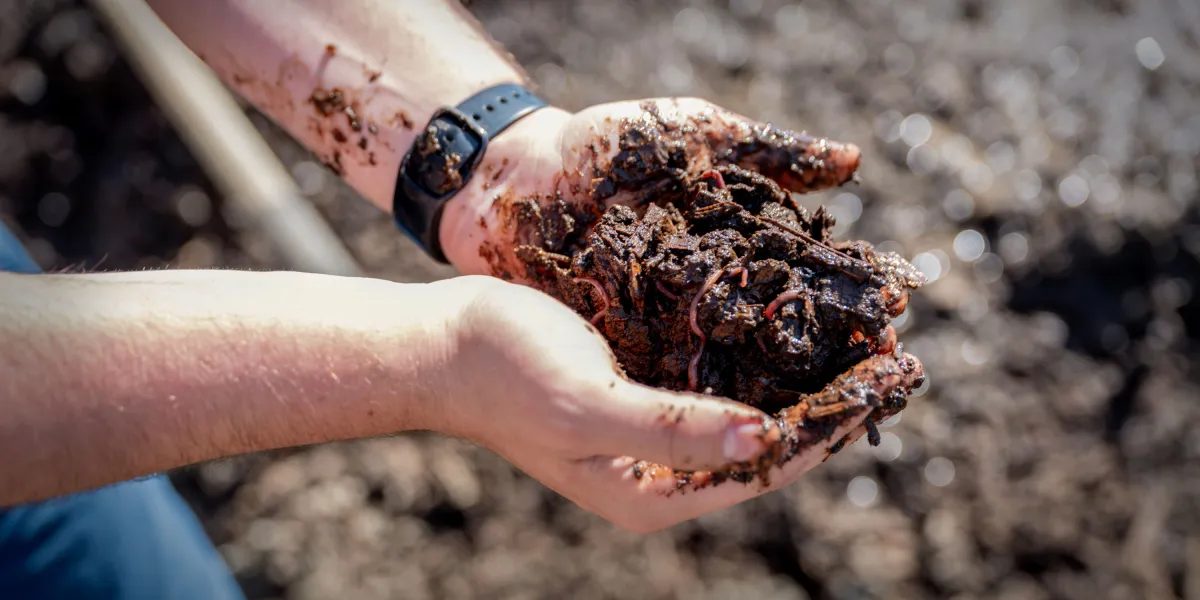
Dairy farmers dealing with one of agriculture's most persistent pollution problems are turning to an unexpected tool: earthworms. On a third-generation California dairy operated by Anthony Agueda, red earthworms buried in beds of wet wood chips are part of a "vermifiltration" system built to clean manure wastewater, according to MIT Technology Review.
The worms, working alongside microbes, break down waste as it filters through the wood-chip bed. The approach may sharply reduce emissions of methane and nitrous oxide, two potent greenhouse gases tied to livestock, while also cutting water pollution, the report said. Beneath the surface of Agueda's filter beds are likely hundreds of thousands of worms doing the work.
Vermifiltration is one of several methods farmers, companies, and researchers are testing as the livestock industry faces mounting pressure over its environmental footprint. Manure management is a significant source of agricultural emissions, and biological filtration offers a route that does not depend on expensive new hardware or chemical treatment.
Why the approach matters
The appeal is straightforward. Rather than engineering a technical solution from scratch, vermifiltration harnesses biological processes that already exist. That keeps costs and complexity low relative to industrial wastewater treatment, which matters for smaller operations that cannot absorb heavy capital spending.
Whether the method scales beyond individual farms remains the open question. The reported benefits on methane, nitrous oxide, and water quality are promising, but the coverage did not attach specific reduction figures, and results on a single California dairy do not automatically translate across climates, herd sizes, or regulatory regimes.
Geoengineering meets its engineering problem
The worm story lands alongside a sobering update on solar geoengineering, the contested proposal to deliberately alter the climate system to offset warming. The idea is moving out of computer models and into practical work on aircraft, materials, and delivery systems, MIT Technology Review reported.
That shift has exposed how much would actually be required. Researchers examining the details are finding that even early-stage deployment would demand substantial new infrastructure, years of development, and heavy investment. In other words, the concept that reads as a fast climate shortcut looks, up close, like a slow and expensive engineering program.
The contrast between the two stories is instructive. One relies on cheap biology already at work in the soil; the other requires building an industrial apparatus that does not yet exist.
Also in the mix
Several other developments featured in the same roundup carry weight for the region's tech readers:
- The Trump administration lifted restrictions on OpenAI's GPT 5.6 after additional testing and meetings, Axios reported. OpenAI said it would launch the model widely the following day, according to Bloomberg, following an earlier delay tied to security concerns reported by The Verge.
- China is weighing curbs on overseas access to its top AI models, with Alibaba, ByteDance, and Z.ai attending meetings about the plan, per Reuters. Beijing is separately assessing the security risks of open-weight AI, according to the South China Morning Post, and has issued a security alert over Claude Code, CNBC reported.
- DeepSeek is developing its own AI chip in a move that could reduce its reliance on Nvidia and Huawei, Bloomberg reported, citing sources.
For readers across Asia-Pacific, the AI governance signals matter most. Potential Chinese restrictions on overseas model access, combined with scrutiny of open-weight systems, point to a tightening posture that could reshape how developers in the region source and deploy frontier models.