
Trump’s Triumphal Arch Plan Reveals Shift in How Washington’s Monuments Get Built
Trump's administration is rewriting federal historic-preservation rules to speed up construction of a controversial 250-foot Triumphal Arch in Washington, potentially reshaping monument approvals nationwide while bypassing standard safeguards.

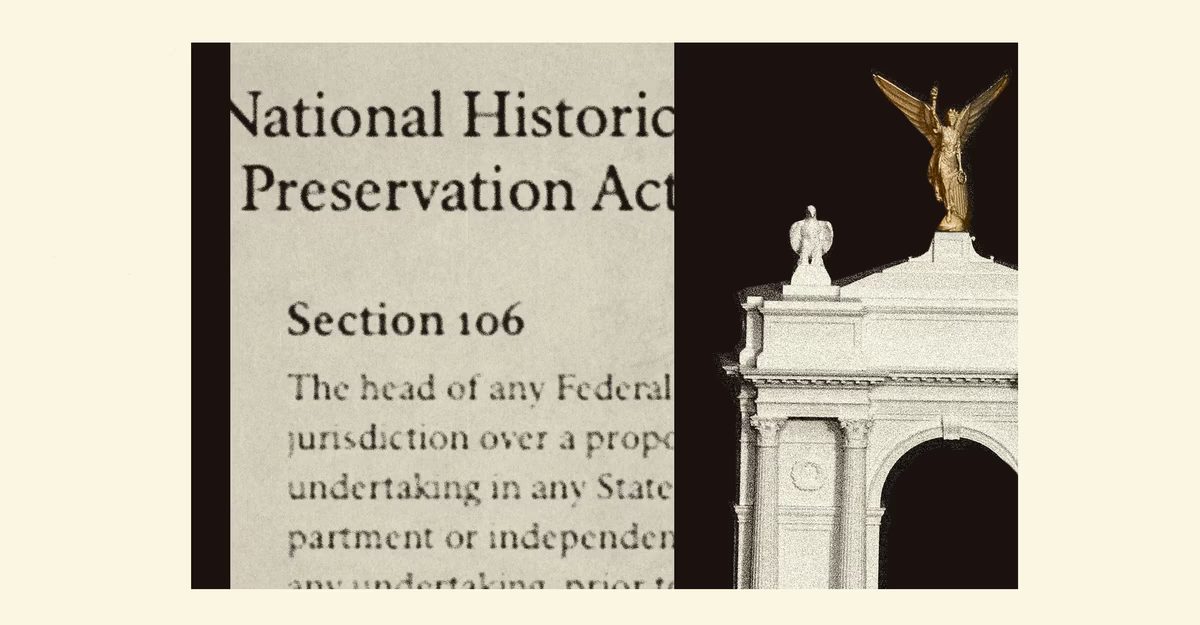
The Trump administration is pursuing a dual strategy to fast-track construction of the United States Triumphal Arch in Washington, D.C.: simultaneously advancing the project through existing approval processes while reshaping the rules that slow down monument-building itself.
The 250-foot granite structure, planned for Memorial Circle on the Potomac's western bank across from the Lincoln Memorial, is proceeding through standard federal review. But an independent agency that Trump has quietly reshaped is now considering rule changes that could bypass many safeguards designed to protect historic sites. A July 17 email and draft amendments obtained by The Atlantic show the Advisory Council on Historic Preservation will vote by July 24 on revisions to Section 106, a federal historic-preservation requirement.
The proposed changes would give federal agencies broader discretion in preservation reviews, prioritize mitigation over avoiding harm to historic sites, and reduce expectations that officials consider alternative designs or locations before construction begins. According to the council's draft Notice of Proposed Rulemaking, the revisions respond to "uncertainties, delays, and regulatory burdens" in current law interpretations.
Sara Bronin, a George Washington University Law School professor who previously chaired the preservation council, warned the proposal goes further than streamlining. It would narrow protections for historic properties, weaken tribal nation consultation, curtail public participation, and exempt large categories of federally backed state and local projects from Section 106 review. "If adopted, these regulations will be challenged in court, and I doubt they will survive judicial scrutiny," Bronin said.
Separately, the arch proposal has already moved faster than typical monument projects. It passed the Commission of Fine Arts and is on track for approval from the National Capital Planning Commission in September, despite a lawsuit filed by Vietnam War veterans and preservationists plus public opposition. A recent poll showed about 52 percent of Americans oppose the project.
The Department of the Interior, overseeing the arch, has not obtained congressional authorization—typically required for new monuments in the civic core—and instead plans 20-hour workdays year-round to complete construction before Trump's term ends. The project carries an estimated $100 million price tag.
Travis Voyles, the Advisory Council's vice chair, instructed members to vote on the proposed rule changes, which would then move to the Office of Management and Budget for further review. The council and White House did not immediately respond to requests for comment.
Architectural critics have called the monument a "monstrosity," "garish tasteless eyesore," and "McMonument," citing its imposing scale. The structure would feature gilded winged statues atop granite.
City officials have urged the Department of the Interior to relocate the arch to another site, but the department has not indicated it is considering such recommendations. A White House official stated the administration "has and will follow all legal requirements in constructing the Triumphal Arch."
The strategy illustrates how the administration has observed official benchmarks governing Washington construction while distorting them enough to ensure rapid approvals. The Commemorative Works Act of 1986 normally requires most new monuments to undergo multiple approval stages, often including congressional authorization. The arch's path has sidestepped several of these steps through reliance on a 1925 plan for Memorial Bridge columns that Congress authorized but never completed—a justification that critics say conflates two unrelated structures.
The broader implications extend beyond this single project. If the preservation council's proposed rules pass, they could reshape how federal agencies handle historic-site reviews nationwide, potentially accelerating federal projects affecting protected properties while reducing public scrutiny and consultation requirements.