The Great Brain Drain: AI Companies Are Emptying Universities of Top Computer Scientists
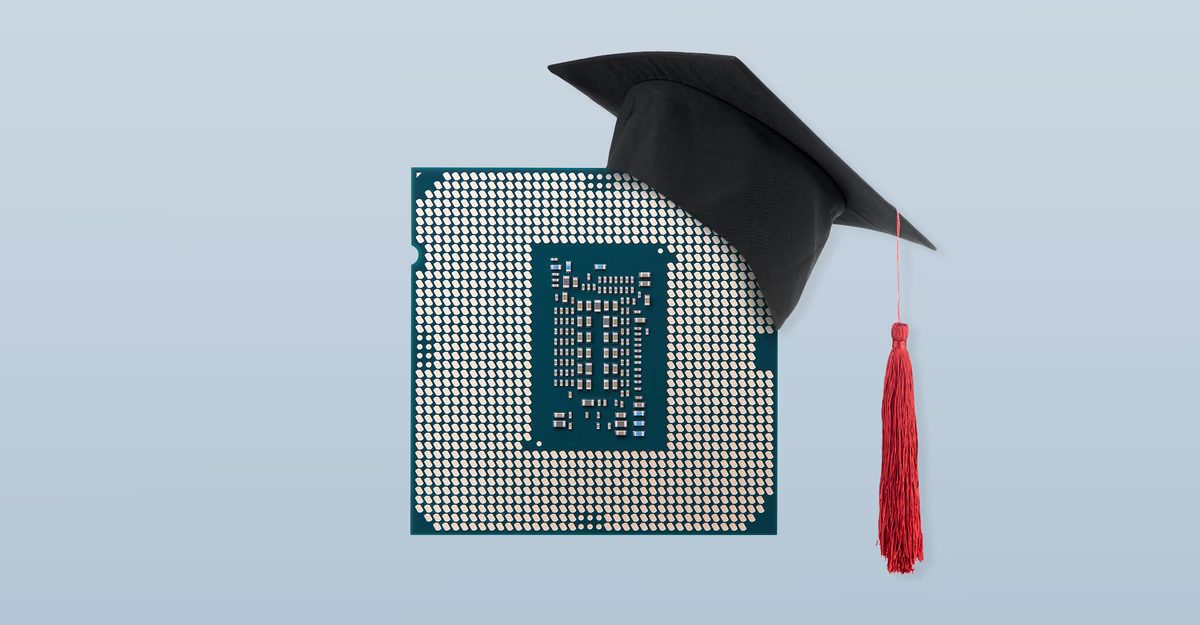
AI companies have recruited over 80 professors from universities—mostly computer scientists—offering salaries and computing resources academia can't match. The shift is locking cutting-edge research behind proprietary doors and leaving universities struggling to teach the next generation.

Anthropic has hired so many high-profile academics that the move has become a running joke among computer scientists. "'I'm joining Anthropic' is the new meme right now," said Subbarao Kambhampati, a computer-science professor at Arizona State University. This month alone, the AI company recruited UC Berkeley's electrical engineering and computer-science department chair, a Stanford economist, a theoretical physicist from the University of Maryland, and an analytic philosopher from UT Austin.
Across Anthropic, OpenAI, Meta, and DeepMind, researchers found more than 80 current and former professors—mostly computer scientists—now working at these firms. Some left academia entirely; others maintain part-time university positions. The actual number is likely much higher, given the researchers didn't have access to internal company data and the count excludes professors who started their own AI firms or work with industry informally.
These companies function increasingly like private research institutions. OpenAI employs mathematicians and physicists, including specialists in black holes and string theory. Meta's AI lab added at least three computer-science professors in late June. DeepMind hosts philosophers; Anthropic's job postings signal interest in hiring legal scholars and political scientists.
For AI researchers especially, the pull is strong. "Much of the important research is being done in industry now," said Humphrey Shi, a Georgia Tech computer scientist who became a vice president at Nvidia last fall. "If you want to do something that really, truly matters, you probably want to join one of those entities."
The incentives are concrete. Tech companies offer salaries academics cannot match. More critically, they provide computing resources at a scale universities cannot replicate—a gap that widened after the Trump administration cut federal research funding. Anca Dragan, a UC Berkeley computer scientist now heading DeepMind's AI-safety department, cited "data, compute, and budget access" as key motivators for the move.
For decades, universities anchored AI research. The field itself began at Dartmouth in 1956 with federal support. When Silicon Valley recognized AI's commercial potential in the early 2010s, companies began recruiting. Google spent $44 million in 2013 acquiring a startup founded by University of Toronto researchers. Facebook hired NYU's Yann LeCun to lead its AI lab; Uber poached about 40 Carnegie Mellon researchers for autonomous-vehicle work.
Historically, many academics who moved to tech firms kept their university positions and maintained open-research norms. OpenAI promised in its founding announcement that "researchers will be strongly encouraged to publish their work." That culture of transparency fueled the AI boom: Google's 2017 paper on the "transformer" architecture—the foundation of ChatGPT—circulated freely and sparked rapid innovation at OpenAI and beyond.
Today's exodus looks different. As AI has become more central to these companies' strategies, they've tightened control over research. Both Stanford's Chris Gregg and UC Berkeley's Jennifer Chayes, dean of the College of Computing, Data Science, and Society, reported hearing from researchers at AI labs that they're restricted from publishing desired work. Companies now withhold much research to protect competitive advantage.
The consequences ripple through academia. With fewer star professors teaching, universities struggle to offer the same breadth of courses and mentorship. Students ask why courses disappear; sometimes the answer is the professor is on leave at an AI company. Top researchers mentor the next generation; when they leave, students lose access to cutting-edge work that makes them attractive to employers.
Chayes warned of a broader danger: "As research concentrates in labs with proprietary models, it will be harder for people outside the labs to use AI models to advance science… Computer-science departments at universities will survive this. I don't know if our innovation economy will."
Some professors remaining in academia form partnerships with frontier labs or launch their own companies—partly to access resources their institutions lack. And a new pressure is emerging: top PhD candidates are skipping graduate school altogether to work at AI firms, further accelerating the brain drain.
There are potential upsides. Many professors at AI labs are on temporary leave and may return to academia with new knowledge about frontier research. Dragan is preparing to teach a PhD seminar on AI safety. Scientists at labs might also innovate faster without grant cycles and peer-review delays. "If some of the best research is being done in these companies, then I kind of want colleagues and faculty members to be there," Gregg said.
But as more academics move to industry, a self-reinforcing cycle takes hold. The center of AI research drifts further from universities, making it more attractive for remaining researchers to follow. Universities lose leverage to retain talent and resources to compete. What was once a shared ecosystem of open innovation increasingly splits into proprietary labs and under-resourced departments.