
Michelle Yeoh on Learning to Say No: How One Word Reshaped Her Career and the Roles Asian Actors Get Offered
Michelle Yeoh on why declining stereotyped roles became her career strategy, and what her Oscar-winning turn reveals about the gap between visibility and substance.

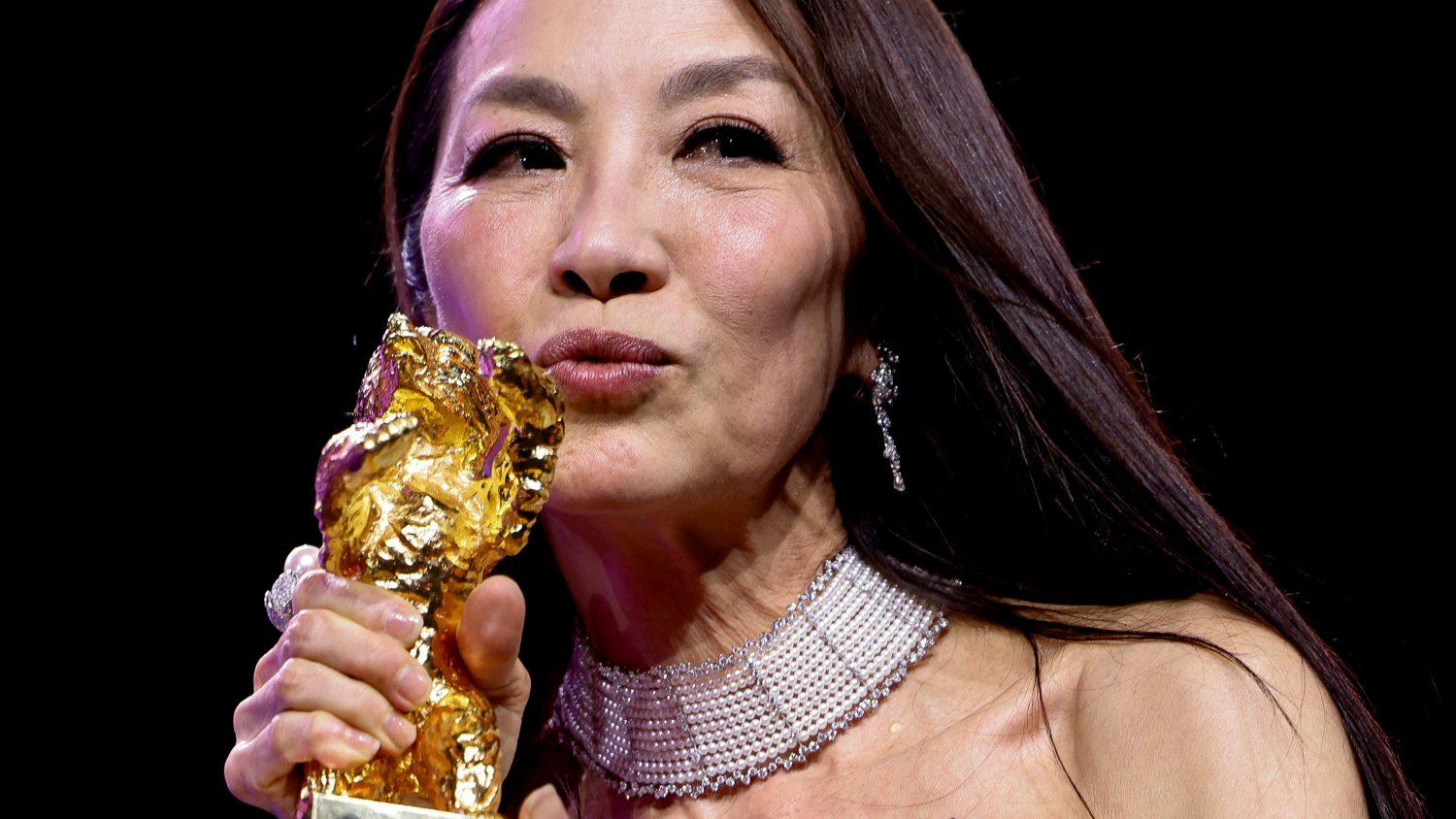
Michelle Yeoh says the most useful word in her career was a short one: no.
In conversations about her trajectory, the actor returns repeatedly to the parts she declined rather than the ones she took. The pattern she describes is familiar to many Asian performers who came up through Hollywood: roles written as accents and silences, characters defined by martial arts ability or quiet submission, supporting figures whose function was to make a Western lead look more interesting. Yeoh's argument is that refusing those parts was not a luxury but a strategy.
The cost of the easy yes
For much of her early international career, Yeoh has noted, the offers that arrived were narrow. She built her reputation in Hong Kong action cinema, then crossed into English-language films with Tomorrow Never Dies in 1997 and Crouching Tiger, Hidden Dragon in 2000. Both were major roles, but both also fit a template the industry already understood: the capable Asian woman as physical spectacle.
The harder choice, by her account, was declining work that paid well and kept her visible but flattened her into a type. Saying no meant gaps between projects. It meant passing on scripts that would have been comfortable. The trade-off she describes is the one many actors of color face without the leverage to absorb it: turn down a stereotype today and risk having fewer offers tomorrow.
Visibility is not the same as substance
Yeoh's central point is that being seen on screen and being written with depth are different achievements, and the industry often conflates the two. A face on a poster can satisfy a diversity metric while the character behind it remains thin.
This distinction matters because it shifts the measure of progress. By Yeoh's framing, the question is not how many Asian actors appear in a given year, but whether the writing treats them as full people with interior lives, contradictions, and arcs that do not depend on their ethnicity for meaning. Representation that stops at casting, she suggests, leaves the underlying scripts unchanged.
What Everything Everywhere All at Once changed
The 2022 film Everything Everywhere All at Once became the proof point for that argument. Yeoh won the Academy Award for Best Actress for her performance, the first Asian woman to win in that category. The role of Evelyn Wang, a middle-aged immigrant running a struggling laundromat who is pulled across parallel universes, gave her something the earlier template rarely did: a character whose Asian identity was specific and lived-in without being the entire point of her existence.
The significance, in Yeoh's telling, is less about the trophy than about the kind of part that produced it. Evelyn was funny, frustrated, exhausted, and capable of change. She was a lead, not a function. The award validated a creative bet that such a character could carry a film commercially and critically, which is the kind of evidence studios respond to more reliably than appeals to fairness.
Why the lesson generalizes
Yeoh frames her experience as instructive for younger performers, particularly those who feel pressure to accept whatever opens a door. Her caution is practical: each stereotyped role an actor accepts narrows the range of parts an audience and a casting director will imagine for them next. Saying no, in that view, is partly about protecting future range.
She is careful not to present this as a universally available choice. Declining work requires financial cushion, alternative offers, and a willingness to wait, conditions that are unevenly distributed. The structural problem sits upstream, in who gets to write, greenlight, and finance the stories. Yeoh's individual refusals could only do so much; what moved the needle was a script that already imagined an Asian woman as its center.
The unfinished part
The broader question her career raises is whether Everything Everywhere signals a durable shift or a single high point. One Oscar does not rewrite the economics of casting, and the supply of layered roles for Asian actors, especially older women, remains limited. Yeoh's position is that progress will be measured in the scripts that get written next, and in how often actors are no longer forced to choose between visibility and dignity.
For now, her advice to those coming up stays consistent with how she describes her own path. Learn what to refuse, and understand that the refusal is part of the work.