
Mark Kelly’s Path From Military Hero to Trump’s Target
Mark Kelly, a retired Navy pilot and NASA astronaut, has become a fierce critic of President Trump despite his typically reserved demeanor. His role as caregiver to his wife, former congresswoman Gabby Giffords, who survived a 2011 shooting, shapes his public identity.

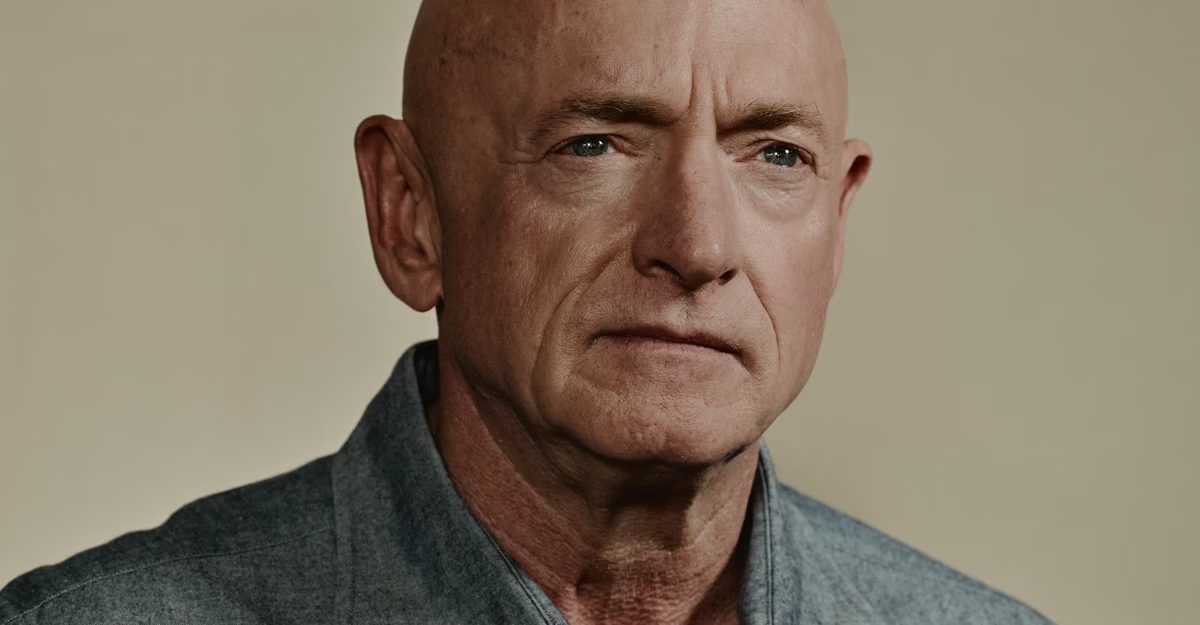
Mark Kelly's résumé reads like a thriller: 39 combat missions in Desert Storm, four space-shuttle voyages as mission commander, a missile detonation above his fighter jet, and fifteen years navigating his wife's recovery from a near-fatal shooting. Yet none of it prepared him for the current conflict with his own government.
The 62-year-old retired Navy pilot and former NASA astronaut has become an unlikely fierce critic of President Trump and Defense Secretary Pete Hegseth. Kelly's willingness to challenge the administration stands in sharp contrast to his typically reserved public demeanor—a quietness born partly from his role as primary caregiver to his wife, former congresswoman Gabby Giffords.
In 2011, Giffords was shot in the head during a mass shooting outside a Tucson Safeway, an attack that fundamentally altered both their lives. The shooting severed her congressional career and left her with non-fluent aphasia, a condition affecting her ability to speak while leaving her intelligence and comprehension intact. Kelly, who had been the quieter half of their partnership, stepped into the role of primary communicator.
"My wife, Gabby, was shot in the head," Kelly repeats with blunt frequency in recent conversations—a statement that encapsulates the starkness and permanence of the incident. That directness now defines how he positions himself publicly. When Trump posted on Truth Social last November calling for Kelly to be hanged, the senator's response reflected the same unvarnished tone: "I mean, it's not great to wake up one morning and to find out the president wants you hanged."
The couple's relationship has become a singular entity in American public life. Giffords communicates in bursts and fragments, often using single words or phrases to prompt Kelly to elaborate with full stories. Senator Kirsten Gillibrand, who was elected to Congress alongside Giffords in 2006 and remains close to them both, describes their dynamic as "very symbiotic." Kelly shifts noticeably when his wife is present, becoming more engaged and animated than his usual mode of quiet intensity.
Their shared sense of humor—dark, absurdist, and dry—surfaces even when discussing the most painful moments. They keep Giffords's actual skull, removed during emergency surgery after the shooting, in a separate freezer. "It's not in the freezer we use every day," Kelly clarified when explaining this macabre detail.
As speculation swirls about whether Kelly might run for president in 2028, the central question becomes how the couple's unparalleled dynamic—marked by vulnerability, mutual support, and hardship—would translate into the spectacle of a presidential campaign. Kelly's résumé of military valor and space exploration achievements, combined with the symbolic power of his marriage to Giffords, has granted him significant admiration among Democratic circles. Whether that admiration can convert to campaign momentum remains an open question.