
Lindsey Graham and the End of an American Foreign-Policy Era
Lindsey Graham, the last of the 'three amigos' alongside McCain and Lieberman, spent two decades arguing American power could do good. His final act was in Kyiv.

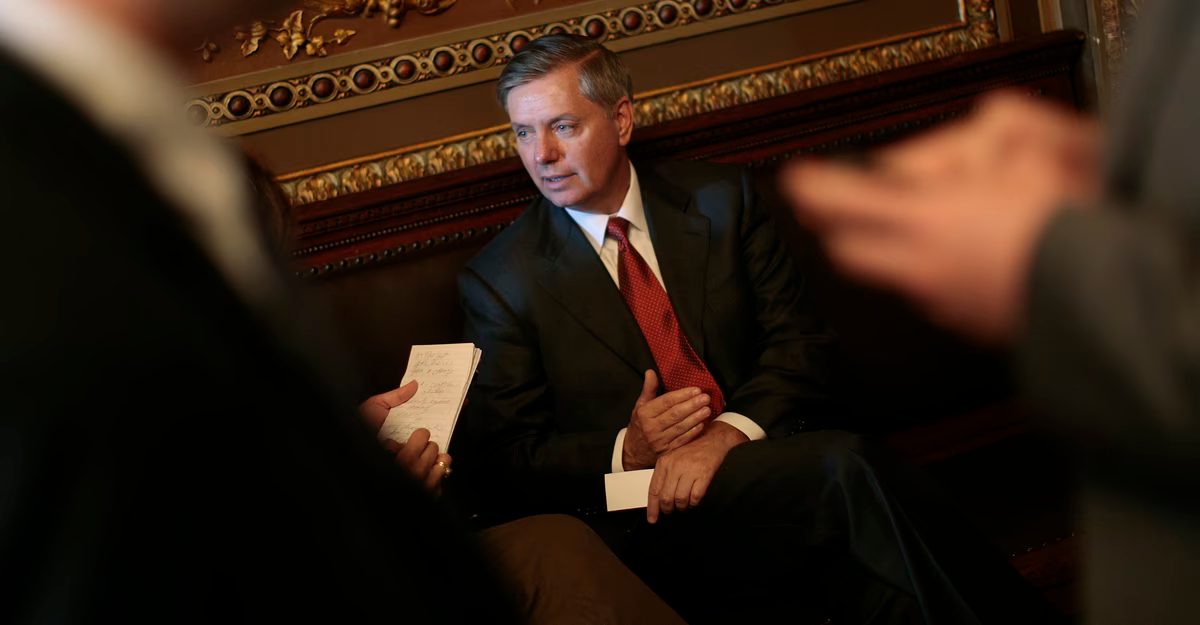
Lindsey Graham, the South Carolina senator who spent more than two decades pressing for an assertive American role abroad, made his last public appearance in Kyiv, a fitting end for a politician whose commitment to Ukraine dated back to 2004, according to a remembrance in The Atlantic by Richard Fontaine, a former foreign-policy adviser to the late Senator John McCain.
Graham was the last living member of the "three amigos," the trio he formed with McCain and former Senator Joe Lieberman. All three shared a conviction that American strength, deployed abroad, could produce good outcomes. With McCain and Lieberman already gone, Graham's death closes out a distinct strand of post-Cold War foreign-policy thinking in Washington.
A Long Record on Ukraine
Fontaine traces Graham's engagement with Ukraine to a 2004 congressional trip during the run-up to a contested election, the one that would eventually be rerun and hand victory to the pro-Western Orange coalition. Graham, then in his first Senate term, met President Leonid Kuchma at a Soviet-era dacha in Crimea. He pressed the case for fair elections directly, telling Kuchma that contributing troops to the Iraq war did not entitle any country to run elections that were not free.
That position offered little political benefit at home. According to Fontaine, Graham returned to the theme repeatedly over the following two decades, sustaining his support for Ukraine through Russia's invasion, through shifts in U.S. policy, and even after his own alignment with President Trump.
The Trump Realignment
Graham's transformation from a McCain-aligned maverick into a Trump loyalist has drawn extensive commentary. Fontaine writes that Graham framed the shift in transactional terms: voters had chosen a leader, and loyalty was the cost of retaining influence over policy on Syria, Ukraine, and Iran.
Whether that fully explains the pivot is left open. Fontaine allows that there may have been more to it, without asserting a definitive account.
A Record of Mixed Judgment
The account does not present Graham as consistently correct. He opposed torture alongside McCain, backed Ukraine, pushed to extend the Abraham Accords to Saudi Arabia, and generally supported foreign aid and diplomacy. He also advocated war with Iraq in 2003 and with Iran in 2026, positions Fontaine identifies as pushing him in the wrong direction.
Graham was drawn to deal-making. When Trump moved to withdraw U.S. forces from Syria beginning in 2018, threatening to abandon Kurdish allies, Graham brokered an arrangement to keep some troops in place and tried to recruit European countries to fill the gap. He worked with Democrats on immigration and climate legislation, and in 2024 sought to tie border security to Ukraine aid. Many of those efforts failed, though Fontaine notes that setbacks rarely deterred him.
The Man Behind the Politics
Fontaine, who traveled with Graham to dozens of countries over five years, describes a senator who was sharper than his occasional southern-hayseed persona suggested and among the funniest people in the Senate. Graham served more than a dozen active-duty stints in combat zones as a colonel in the U.S. Air Force Reserve while sitting in the Senate, often staying behind after congressional trips to Iraq and Afghanistan.
The tributes now arriving from both parties acknowledge sharp disagreements with Graham. As Fontaine frames it, no one considered him right all the time, and Graham himself changed his mind on various issues. What set him apart, in this telling, was his tenacity when he believed he was on the right side of an argument.
His death marks more than the loss of a single legislator. It removes the last active proponent of a particular vision of American engagement, one that the current political environment has largely moved past.