
AI is compressing drug discovery timelines by predicting molecular success before lab work begins
Machine learning models now compress drug discovery timelines by predicting molecular success before lab work, with AI-driven approaches potentially cutting development time by 50% when combined with other computational tools.

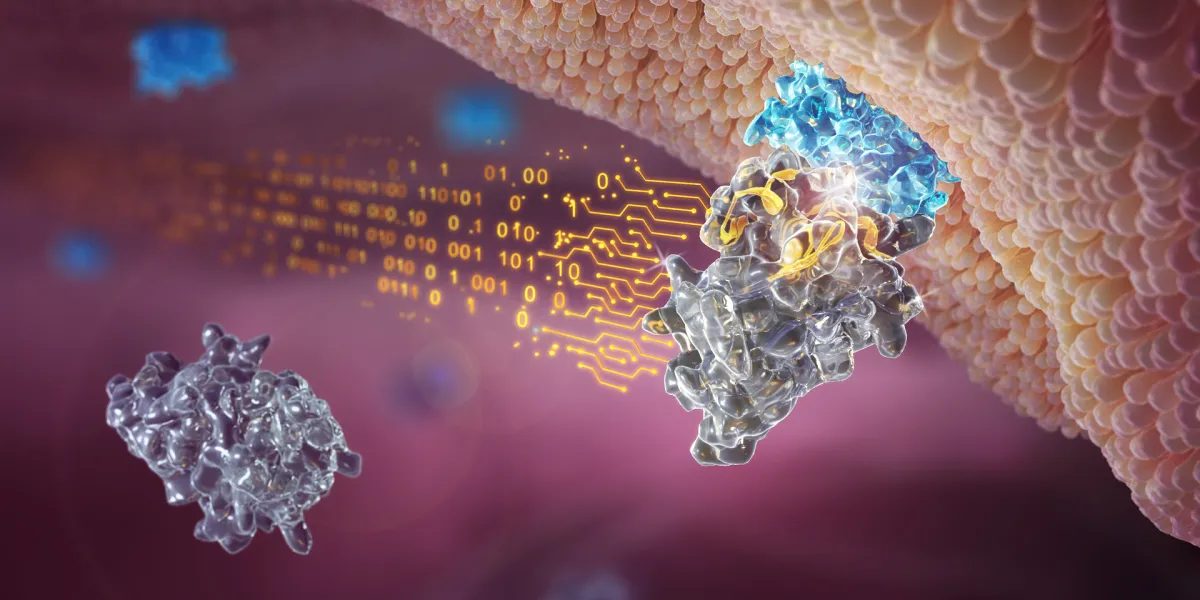
Designing a new medicine typically takes years and costs hundreds of millions of dollars, with most molecular candidates failing before reaching patients. AI is beginning to change that equation by automating early-stage screening and prediction.
At AstraZeneca, a build-measure-learn workflow now underpins drug discovery across design, manufacturing, testing, and analysis phases. AI generates or ranks candidate molecules computationally, predicting which designs are most likely to succeed before scientists allocate lab resources. The result: shorter iteration cycles, fewer dead ends, and exploration of disease targets previously considered untreatable.
"Everything we do is now computationally enhanced," says Puja Sapra, senior vice president and head of R&D biologics engineering and oncology targeted discovery at AstraZeneca. "The cycle times are getting shorter while productivity and innovation increase."
The computational advantage becomes critical when the scale of molecular possibility is considered. The number of potential protein combinations vastly exceeds what human teams can systematically test. Using AI to narrow candidates for lab validation has become a standard practice in biologic drug design.
Multi-target medicines and the data advantage
Beyond speed, AI enables design of more complex medicines. Next-generation therapeutics can target multiple disease pathways simultaneously or deliver payloads to specific cells, requiring optimization across numerous variables. According to McKinsey research cited by AstraZeneca, generative AI combined with other computational tools could reduce drug discovery timelines by up to 50%.
But AI models are only as effective as their training data. In drug discovery, this means access to large, high-quality biological datasets spanning molecular structures, binding measurements, safety profiles, and manufacturing outcomes. AstraZeneca has built multimodal datasets across multiple disease areas and drug types, using this proprietary information to fine-tune frontier AI models.
"Data is our differentiator," Sapra explains. The company has also invested in deep screening technologies to generate additional datasets needed to continuously refine and validate models.
Toward autonomous discovery
AstraZeneca is constructing a "lab of the future" facility in Cambridge, Massachusetts designed as a closed-loop system where AI predictions, robotic execution, and instrument-generated data feed continuously into one another. Similar to how autonomous vehicles use sensors and models to navigate, this system uses AI forecasts, robots to run experiments, and instruments to produce data that directly informs the next cycle.
At scale, such systems could evaluate thousands of molecular interactions weekly, generating AI-ready data at volumes traditional workflows cannot match. Scientists will remain central to oversight and strategic direction, Sapra notes.
The de novo frontier
The ultimate goal is "de novo" design: AI generating entirely novel protein sequences tailored to specific drug properties, including structure, predicted safety, in-body behavior, and manufacturability, without human input on molecular design.
Reaching this point requires several preconditions. First is standardized, industry-wide training data. Second is robust benchmarks for evaluating AI-generated candidates. Third is interdisciplinary teams skilled at the intersection of machine learning and biology.
Predicting safety may be the most critical hurdle. AstraZeneca is addressing this through "virtual clinical trials" using advanced cell systems and organ-scale models paired with AI that learns from their outputs. These systems can generate biological signals without traditional testing bottlenecks and serve as a bridge between computationally designed molecules and clinical-ready candidates.
An emerging shift toward agentic AI systems—those that simultaneously generate candidates and predict efficacy and safety—could further accelerate progress by connecting disease-level insights directly to molecule design.