Richard Hanania’s Case Against Populism—and Why It Matters Coming From Him
Richard Hanania, a former white supremacist turned Trump critic, argues that populist backlashes globally empower corrupt, ineffectual leaders. His thesis has merit. His credibility does not.

In 1876, poet and Atlantic founding editor James Russell Lowell watched corruption scandals plague the Grant administration and asked: Is America truly a "government of the people, by the people, for the people," or a kakistocracy—rule by the worst?
One hundred fifty years later, the term has circulated widely again. President Trump has pursued self-dealing that eclipses the Grant era, installing a public-health chief who promotes vaccine skepticism and claims parasitic brain damage, while prioritizing White House renovations over economic or diplomatic priorities.
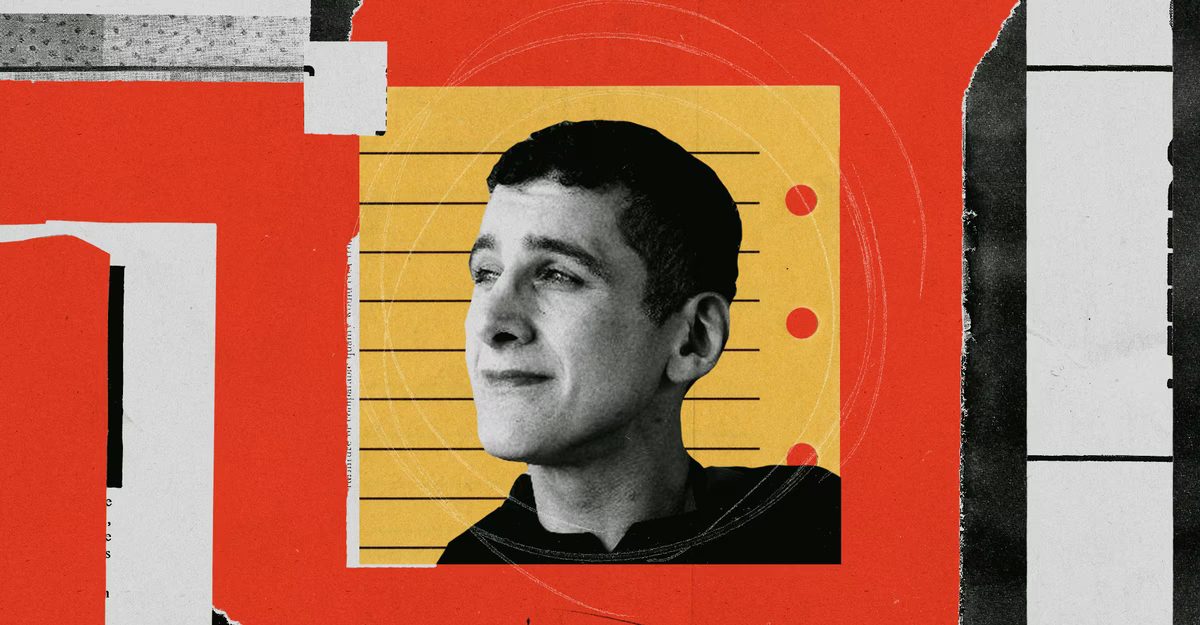
Richard Hanania, a writer and political analyst, attributes this pattern to populism itself. In his book Kakistocracy: Why Populism Ends in Disaster, Hanania contends that populist movements worldwide have elevated corrupt, ineffectual leaders who corrode democratic institutions and damage economies. The mechanism, he argues, is straightforward: populism rejects elite expertise, and the expert consensus is usually correct.
For progressive readers, that thesis rings true—until they confront the messenger. Hanania spent his early career posting pseudonymously as a white supremacist, advocating for forced sterilization and advancing claims about racial IQ differences. A 2023 HuffPost investigation exposed his pseudonymous articles on white-supremacist websites. He has since publicly disavowed those views, though critics remain skeptical of his sincerity, pointing to his continued opposition to antidiscrimination law and his references to demographic groups as having different "human capital."
Yet Hanania's political trajectory is instructive. Years ago, he was feted by tech billionaires and MAGA intellectuals. Marc Andreessen included him in group chats. J.D. Vance called him "my friend" on podcasts. Hanania contributed to Project 2025 and wrote The Origins of Woke, a manual for dismantling DEI policies that the Trump administration faithfully adopted.
Then, in April 2025, Hanania announced a reversal. The anti-DEI agenda was sound, he said, but the administration's brazen corruption and incompetence outweighed the policy victories. He had not anticipated Trump would actually pursue the more extreme promises.
Hanania's audience numbers around 50,000 Substack subscribers, mostly unpaid, and roughly 200,000 followers on X—a reach disproportionate to his size. His readers include prominent journalists, MAGA influencers, and the sitting vice president.
His central claim deserves serious consideration: that populist leadership style cannot be separated from populist corruption and dysfunction. If he is right, left-wing populism will not remedy MAGA—it will repeat the pattern.
Yet his argument also exposes a tension at its core. "Trust the experts" carries different weight when spoken by a school librarian versus a former white nationalist who dismisses opponents as the "low human capital coalition." The slogan has always implied that some citizens are wiser and more fit to govern than others. Hanania makes that implication explicit, which makes his work difficult to endorse even when his logic seems sound.
The paradox is acute: a man who benefited from populist mechanisms—bypassing traditional gatekeepers via social media and Substack—now argues that such mechanisms empower the wrong people. He is living proof that gatekeepers existed for reasons. Yet he is also making a case that may be correct.