Trump Overrules His Own DHS, Ordering ICE to Resume Traffic Stops After MAGA Backlash
Trump publicly overruled his own DHS, ordering ICE to resume vehicle stops a day after a memo suspended them following two fatal officer shootings.

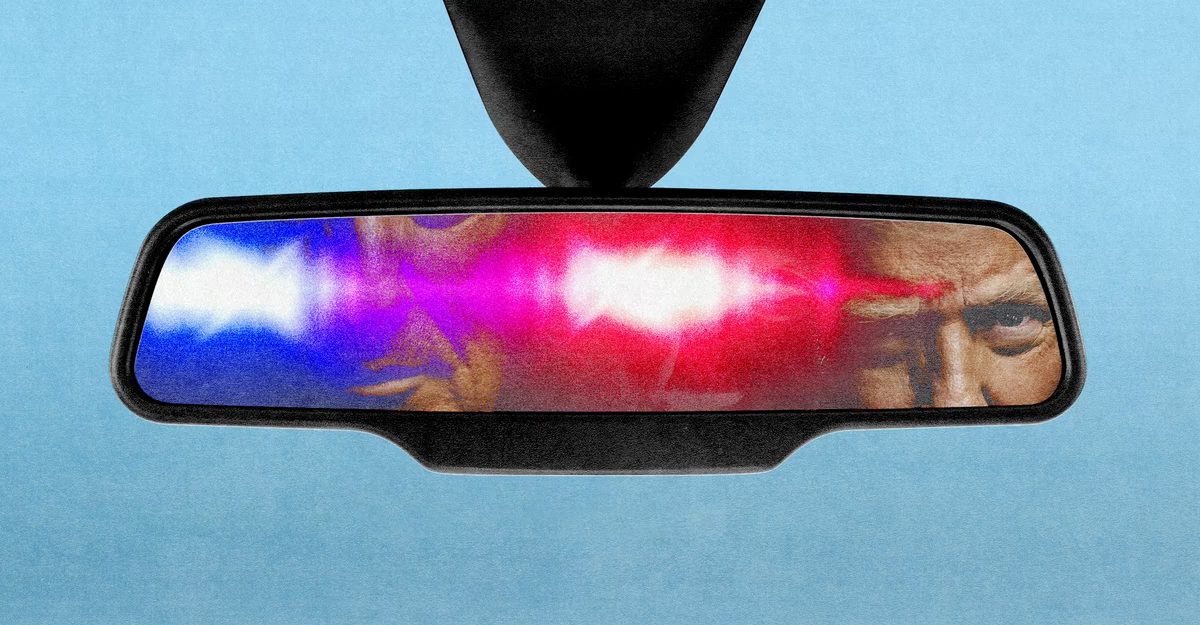
President Trump publicly overrode his own administration on July 15, directing Immigration and Customs Enforcement officers to disregard an internal memo that had suspended most vehicle stops barely a day earlier. The memo followed two fatal shootings by ICE officers within a week.
Writing on Truth Social, Trump insisted the agency could not surrender what he called one of its most effective crime-fighting tools. The reversal, reported by The Atlantic's Jonathan Lemire and Nick Miroff, came after what White House officials described as sustained pressure from immigration hard-liners in the president's base.
What the memo did, and why it was pulled
The freeze on vehicle stops was issued late Monday under Homeland Security Secretary Markwayne Mullin, who had spoken with Senator Susan Collins of Maine. The trigger was the death of Joan Sebastian Guerrero, a 26-year-old delivery driver from Colombia, who was shot in the head by an ICE officer in Biddeford, Maine. According to The Atlantic, the officer was a recent recruit who had joined ICE this year after working as a police officer at the Department of Veterans Affairs.
Six days earlier, an ICE officer in Texas killed Lorenzo Salgado Araujo, a construction contractor from Mexico who had lived in the United States for 35 years. Neither man had a criminal record, according to publicly available sources cited by The Atlantic, and neither was the target of the stop that led to his death.
Collins, a Republican up for reelection, said DHS had agreed to halt nonurgent stops and urged the department to speed delivery of body-worn cameras to officers. Senior ICE officials told The Atlantic that officers were not receiving adequate training on conducting vehicle stops and de-escalating confrontations with drivers who fail to comply.
The pressure campaign
White House officials said Trump had absorbed a steady stream of complaints from hard-line allies over the preceding day. According to The Atlantic, the decisive factor was cable-news coverage Trump watched that morning, alongside public and private criticism from figures including influencer Tomi Lahren, former Border Patrol commander Greg Bovino, and podcaster Steve Bannon.
One official told the outlet that Trump concluded abandoning traffic stops would "make them all look weak."
Much of the internal blame landed on Mullin, who took over DHS in March. Two outside advisers told The Atlantic that critics in MAGA text chains gave him the nickname "Kung Fu Plumber," a reference to his background running a plumbing-and-HVAC business and his history as a mixed-martial-arts fighter. Some allies described him as "soft" and an "appeaser."
The origins of the pause remain disputed. Officials at DHS and ICE told The Atlantic it was unlikely Mullin would have issued the order without White House sign-off, with one saying flatly, "Not a chance." A senior administration official denied any advance approval and said Trump had not known about the memo.
A muted response from DHS
Mullin did not directly address the president's countermand. In a social-media statement, he said the department's top goal was to keep officers safe and remove criminals from the streets. In a separate statement provided to The Atlantic, he said, "President Trump and I are on the same page."
As of the afternoon of July 15, ICE had not formally issued new orders rescinding the original memo, according to officials the outlet spoke with.
The legal and operational stakes
The shootings raise questions grounded in the 1985 Supreme Court decision Tennessee v. Garner, which bars officers from using lethal force solely because a suspect disobeys commands or attempts to flee. An officer must be able to articulate a reasonable fear of imminent harm. A driver accelerating toward an officer would present a threat; one swerving to escape would not, on its own, meet that standard.
The operational logic behind traffic stops explains their central role in current enforcement. According to The Atlantic, ICE arrests have climbed to nearly 2,000 a day, roughly double the spring pace. Officers rely on vehicle stops to detain people leaving for work because, unlike home arrests, they do not require a judge's warrant. Resuming the stops will likely keep arrest numbers rising while also carrying the risk of further deaths.
A familiar pattern
The episode echoes a dynamic from Trump's first term, when he repeatedly retreated from positions after criticism from Republicans on conservative media, most notably during the 2018 budget standoff. In his second term, he has more often aligned with the right's demands, leaving fewer openings to be outflanked. The reversal suggests that when the base frames a decision as weakness, the calculus still holds.