European Fertility Group Pushes for Global Cap on Sperm Donor Offspring
A European fertility group wants international caps on sperm donor offspring, while AI researchers turn to 'world models' to teach machines about physical space.

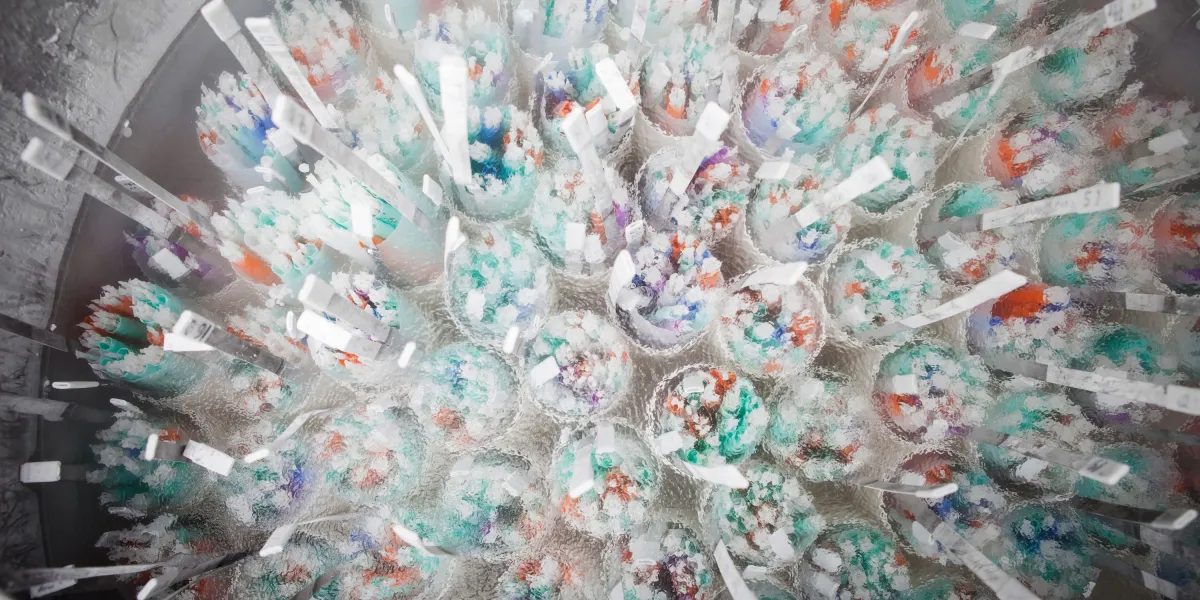
A European fertility organization is calling for international limits on how many children a single sperm donor can produce, responding to a growing number of donor-conceived people who have discovered they share a donor with dozens or even hundreds of others.
The issue is personal for people like Ties van der Meer, 47, who was conceived at a private fertility clinic using sperm from an anonymous donor. He has tracked down one sibling but suspects there are others he will never locate. One donor-conceived person cited by MIT Technology Review, who found they had 25 half-siblings, described the experience of feeling "a bit mass-produced."
The absence of cross-border rules is the core of the problem. Individual clinics and countries set their own caps, but a single donor's sperm can be shipped and used across multiple jurisdictions, making national limits easy to sidestep. A coordinated international ceiling would aim to close that gap, though enforcement across differing legal systems and private clinics remains the hard part.
Why AI still struggles with the physical world
Large language models have reshaped what software can do with text, but operating in physical space is a separate problem. A model that can write code or summarize a document does not inherently understand gravity, object permanence, or how a robot arm should move to pick up a cup.
That gap is driving interest in what researchers call world models, systems designed to give machines an internal representation of how the physical world behaves. The approach is central to robotics, where a machine needs to predict the consequences of its actions before taking them.
MIT Technology Review is hosting a LinkedIn Live session on the topic featuring Will Douglas Heaven, its senior editor for AI, and Sam Sinha, founding AI researcher and head of world models at 1X Technologies. The free session is scheduled for Tuesday, July 14, at 9:30 PDT.
Apple sues OpenAI over alleged trade secret theft
Elsewhere in the sector, Apple has filed suit against OpenAI, alleging the company stole trade secrets to develop its own consumer hardware, according to CNBC. The complaint claims OpenAI poached Apple staff to gain access to proprietary information and sought trade secrets during job interviews with Apple employees, as reported by the BBC and the Guardian.
Apple also named two former employees, Chang Liu and Tang Tan, in related legal action, Reuters reported. The suit points to an internal message allegedly sent by Liu to a colleague: "LOL, I found out I can access the [network storage], so funny." The lawsuit frames the message as evidence of a scheme to move hardware intellectual property to OpenAI. OpenAI has not confirmed the claims, and the allegations remain untested in court.
The disputes sit at the intersection of two active fault lines in tech: the tightening race to build AI-native consumer devices, and the talent poaching that has intensified as companies compete for a narrow pool of specialized engineers.