
Trump Loses Lindsey Graham, His Senate Fixer, as Agenda Fights Loom
Lindsey Graham's sudden death removes Trump's most reliable Senate bridge, complicating confirmation and reconciliation fights and a South Carolina succession scramble.

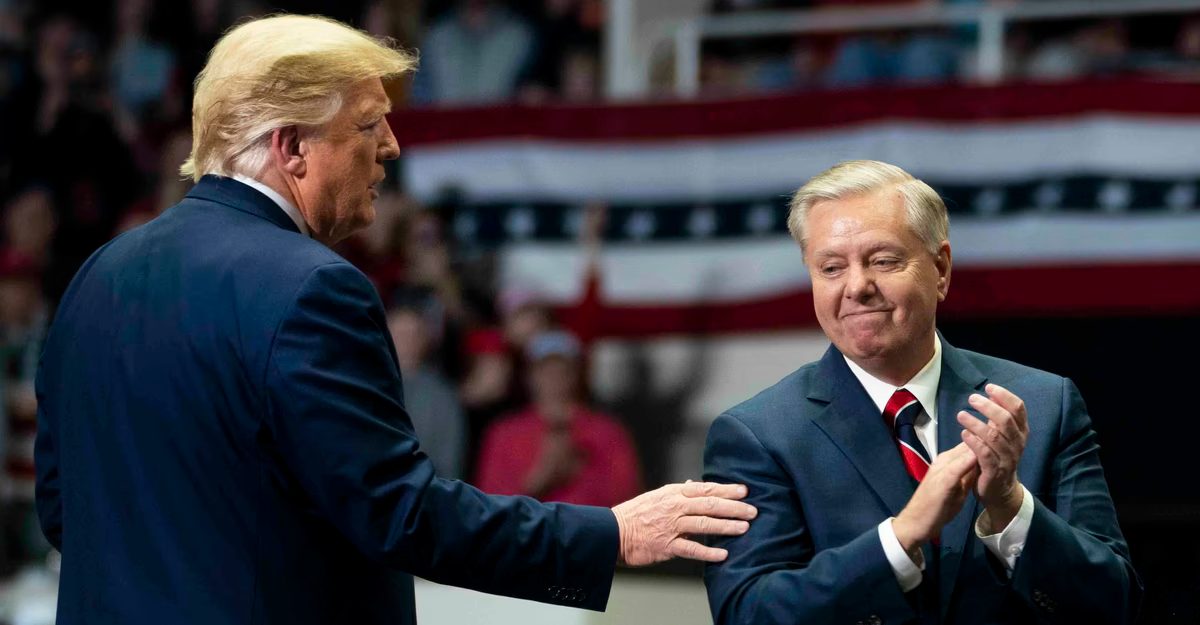
Senator Lindsey Graham of South Carolina died overnight after what his office described as "a brief and sudden illness," removing one of President Trump's closest allies in Congress and complicating several priorities moving through the Senate. The news was reported by The Atlantic.
Graham had spoken with Trump by phone the night before, after returning from a trip to Ukraine, according to Trump's account on CNN. The president said Graham had been "full of vim and vigor" and mentioned only that he was tired from the long trip. Trump posted at 3:21 a.m. that Graham was "one of the greatest people and Senators I have ever known," and flags at the White House were lowered to half-staff by morning.
Why the loss matters for the agenda
Graham functioned as a mediator between the White House and Capitol Hill at a time when Trump's relationship with Senate Republicans has been strained. His death, per The Atlantic, throws open questions about the timing of a new reconciliation bill that could carry portions of Trump's SAVE America Act on voting, as well as the confirmation fight over attorney-general nominee Todd Blanche.
The timing compounds an existing gap. Senator Mitch McConnell was hospitalized last month with no clear return date, according to the report, leaving Senate Republicans with thinner margins on close votes. For the party's pro-Ukraine wing, the two absences land together: Graham was a consistent supporter of Ukraine, met with President Volodymyr Zelensky on Friday, and said from Kyiv that he had persuaded Trump to back his long-stalled Russia sanctions bill.
A succession fight in South Carolina
Attention in South Carolina turned immediately to who fills the seat. Governor Henry McMaster, described in the report as a Trump ally, will name a temporary replacement through January, with a special Republican primary next month to pick a nominee. Graham, who had been up for reelection, won his own primary last month.
The replacement calculus carries a House complication. Appointing a sitting House Republican would further narrow the party's slim majority in the lower chamber. The White House opposes Representative Nancy Mace, a former ally turned frequent critic who has reportedly expressed interest, per The Atlantic. Trump declined to name his preferred candidate on NBC's Meet the Press, saying it was "too soon with Lindsey."
A decade-long realignment
Graham's path to Trump's inner circle was not a straight line. He ran for president in 2016 and called Trump unfit, warning that the party would "get destroyed" if it nominated him. The relationship soured further when Trump read Graham's personal cellphone number aloud at a campaign event. Over the following decade, Graham became one of Trump's most visible defenders on cable news and a regular golf partner.
Throughout, according to the report, Graham held to a hawkish foreign policy line: tough on Russia, supportive of Ukraine, and among the loudest voices urging Trump toward military action against Iran, a conflict The Atlantic characterizes as having become a problem for the White House. He broke with Trump after January 6, declaring "enough is enough," then returned once it was clear Trump remained the dominant figure in Republican politics.
Administration figures marked the death publicly. Vice President Vance recalled a shouting match with Graham over Ukraine funding followed by cooperation on rail legislation, saying he "fought like hell for the things he believed in." White House aide Stephen Miller wrote that meetings with Graham were "filled with camaraderie, kinship and uproarious laughter." Press Secretary Karoline Leavitt wrote that the White House had "lost a friend."
What remains unresolved is procedural rather than symbolic: whether the Senate GOP can hold its margins on the reconciliation package and the Blanche confirmation without the operator who most often kept the White House and the caucus talking.