
Lindsey Graham’s Death Closes a Chapter on the Republican Party’s Transformation
Lindsey Graham, dead at the close of a career that moved from McCain-era internationalism to MAGA loyalty, embodied his party's transformation.

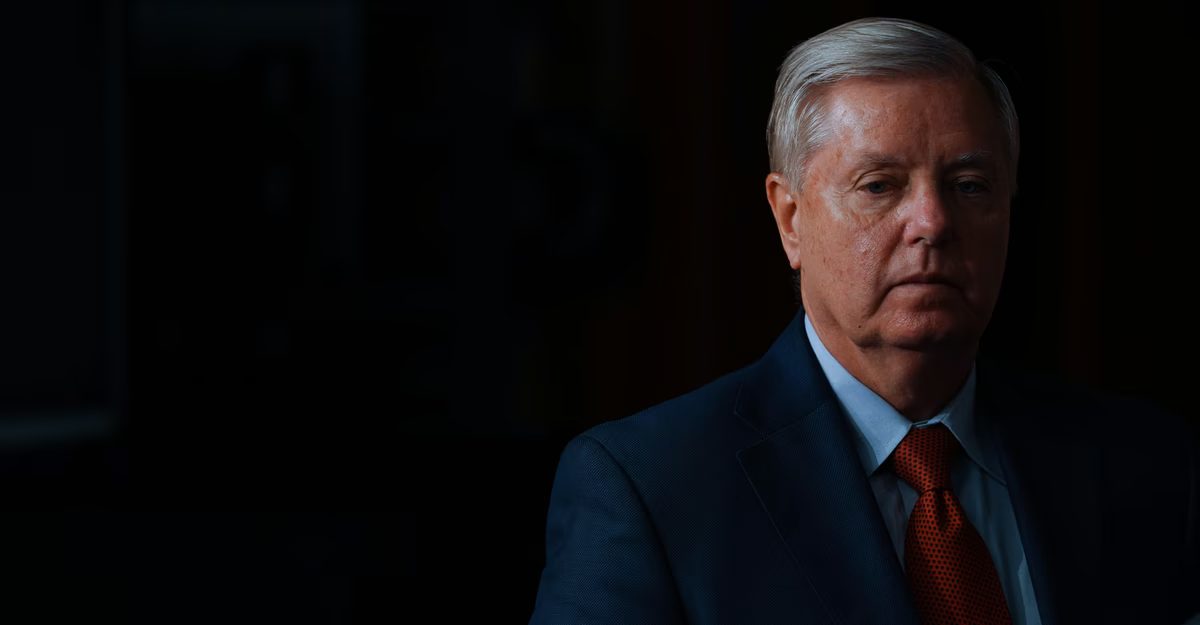
Lindsey Graham, the Republican senator from South Carolina, died on Saturday evening, according to a July 2026 essay in The Atlantic by staff writer Anne Applebaum. His death removes from Donald Trump's orbit one of the last figures who retained ties to an older version of the Republican Party, one built around alliances and democratic advocacy abroad.
Applebaum frames Graham as a representative figure of the current political era, someone whose arc traced the broader shift within his party. That framing rests on the contrast between the two halves of his career.
From Air Force lawyer to Senate internationalist
Graham's biography shaped the first phase of his political identity. Raised in a small South Carolina town, he put himself and his younger sister through college after their parents died while he was in his 20s, relying on an ROTC stipend and later an Air Force salary, according to The Atlantic. He worked as a military lawyer, served in West Germany during the Cold War, and remained in the Reserves for two decades, traveling to Iraq and Afghanistan even while serving in the Senate.
"The Air Force has been one of the best things that has ever happened to me," Graham said in 2015, as quoted by The Atlantic. He credited it with giving him "a purpose bigger than myself."
Along with his close ally John McCain, Graham positioned himself as a defender of American leadership within a democratic alliance. In a 2014 conversation with The Atlantic, he described himself as a pragmatist who avoided populist rhetoric, saying that what was broken in Washington was "everybody yelling and nobody trying to fix it."
The turn toward Trump
Graham's early reaction to Trump was openly hostile. In 2015, he called Trump a "race-baiting, xenophobic, religious bigot" and a "nutjob," language documented in the same Atlantic essay. Applebaum reports that after Trump won, Graham went quiet, appearing visibly deflated at a European security conference in the spring of 2016.
What followed was a reversal. Graham became a visible Trump ally, playing golf with the president, defending him on television, and backing him through policy shifts that cut against Graham's earlier commitments. In 2021, he declined to vote to convict Trump after the Capitol assault and the effort to overturn the election result.
Applebaum does not claim certainty about Graham's motives. She raises the possibility that he sought proximity to power or feared losing his Senate seat, while leaving the question open.
The Ukraine exception
One thread of Graham's older politics persisted. After Russia's 2022 invasion of Ukraine, he supported the transfer of American weapons and repeatedly introduced legislation to sanction Russia, according to The Atlantic. Those sanctions bills stalled, never taken up by a president reluctant to pressure Moscow.
Graham made 10 trips to Ukraine, returning from the last one the day before he died, the essay states. His advocacy carried little weight with Trump, who The Atlantic reports pressed the Ukrainian president toward concessions and halted weapons transfers.
Why it matters
Graham's career is a case study in how individual politicians accommodated a changing party rather than resisting it. His death, as Applebaum presents it, marks the departure of one of the few voices near Trump who still carried a connection to the pre-Trump Republican consensus on foreign policy. For readers tracking how democratic alliances and institutional norms have shifted over the past decade, that trajectory is the point of the story.