
IMF Says the World Shrugged Off Trump’s Iran War. Then the Bombing Resumed.
The IMF said the world absorbed Trump's Iran war better than feared, forecasting 3 percent growth. Hours later, the bombing resumed, resetting the shock.

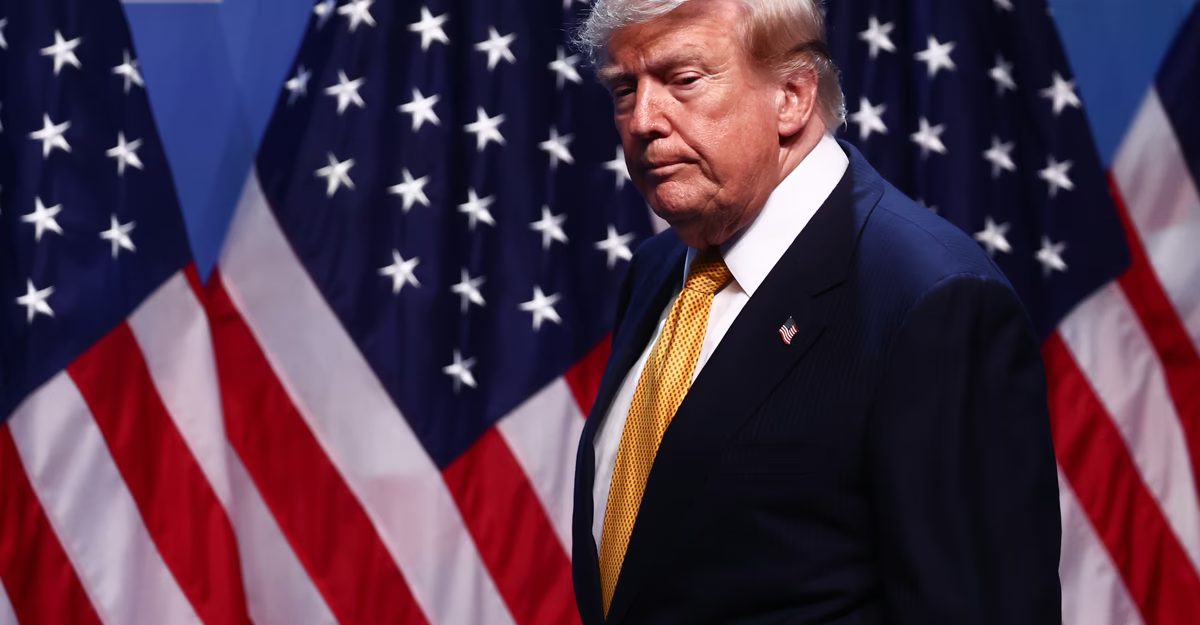
The International Monetary Fund said on July 8 that the global economy had absorbed the recent Iran war better than it had feared, forecasting 3 percent GDP growth for 2026. Hours later, President Donald Trump declared the cease-fire "over" and the United States resumed bombing Iran, resetting the same shock the IMF had just measured.
The timing captures a conflict that keeps existing in two states at once. The Strait of Hormuz has been described as both open and closed. Cease-fires have overlapped with intermittent strikes. The Trump administration has repeatedly claimed a decisive victory while negotiating a settlement that Iran appears to want and not want, according to The Atlantic. For businesses and consumers, the result has been months of planning around a war that is happening and not happening.
Two projections in one number
The IMF's 3 percent forecast sits below the 3.3 percent it projected before the war began, but only marginally under its more pessimistic April estimate, which had raised the prospect of a global recession. Global inflation is now pegged at 4.7 percent, driven largely by war-linked increases in oil and natural-gas prices.
What that headline number hides is that it blends two economies most countries will not both experience. Energy importers in Europe and Asia held up better than expected for two reasons: they drew down oil and gas reserves to avoid shortages, and the artificial-intelligence boom kept equipment exporters such as China and South Korea growing faster than forecast. The single average, in other words, is stitched together from economies that barely felt the war and economies bracing to feel it fully.
The exporter that paid nothing
The United States, a net energy exporter, imposed war-related costs on the rest of the world without denting its own growth, per the IMF's read. It is one of the few advanced economies the fund expects to grow faster in 2026 than in 2025. American consumers have complained about pump prices, but the S&P 500 is up roughly 9 percent since the joint American-Israeli operation that opened the war in February.
That asymmetry may explain the willingness to restart hostilities. Having run one stress test on global markets at little domestic cost, the administration had limited financial reason not to run another.
Where the second half of the world is exposed
The cushions that softened the first phase are thinning. Europe's natural-gas reserves, normally built up ahead of winter, are now very low. Reserves initially dampened price pressure; the scramble to refill them before the cold months could now amplify it instead.
For poorer economies outside technology supply chains and reliant on imported energy, there is no AI offset. If oil and gas grow scarcer as reserves empty, these countries risk being outbid on remaining supply. Food is a further pressure point. The Strait of Hormuz is a key route for materials used in agricultural fertilizer, whose costs have already climbed. The IMF warned that steeper prices could push South Asia and sub-Saharan Africa toward serious food shortages.
Monetary policy compounds the split. War tends to lift both inflation and debt, pressuring central banks in large economies to raise rates. The Federal Reserve has held rates steady this year rather than cutting and may raise them later in 2026 if inflation risk grows. Higher rates in wealthy countries also pull investment away from emerging markets such as Egypt and Pakistan, according to the fund.
The Asia read
Asia illustrates the divide most sharply. China and South Korea have ridden AI-driven equipment demand to outperform expectations, insulating them from the energy shock. South Asia sits on the opposite side of the ledger, exposed to both fertilizer-linked food risk and capital outflows as investment concentrates in higher-rate advanced economies. The same regional map contains the war's clearest winners and its most vulnerable populations.
The reopened downside
The memorandum of understanding that Iran and the United States signed last month now appears to have unraveled, and American sanctions on Iranian oil, briefly lifted, have snapped back. "Reescalation of geopolitical tensions would hurt growth and compound inflationary pressures," the IMF warned, citing new trade frictions and a higher risk of social unrest and domestic political instability.
After the renewed strikes, Trump told reporters that Iran was seeking terms. "They called a little while ago. They want to make a deal so badly," he said, adding that he was unsure whether they were "worthy" of one. Whether the next phase leaves the 3 percent forecast intact depends on which of the two economies the war ends up feeding.