Marco Pantani’s 1997 Alpe d’Huez record endures nearly 30 years later
Marco Pantani's 37:35 ascent of Alpe d'Huez in 1997 remains cycling's fastest. As the 2026 Tour returns to the mountain across two stages, his record looms as sport's most tantalizing benchmark.

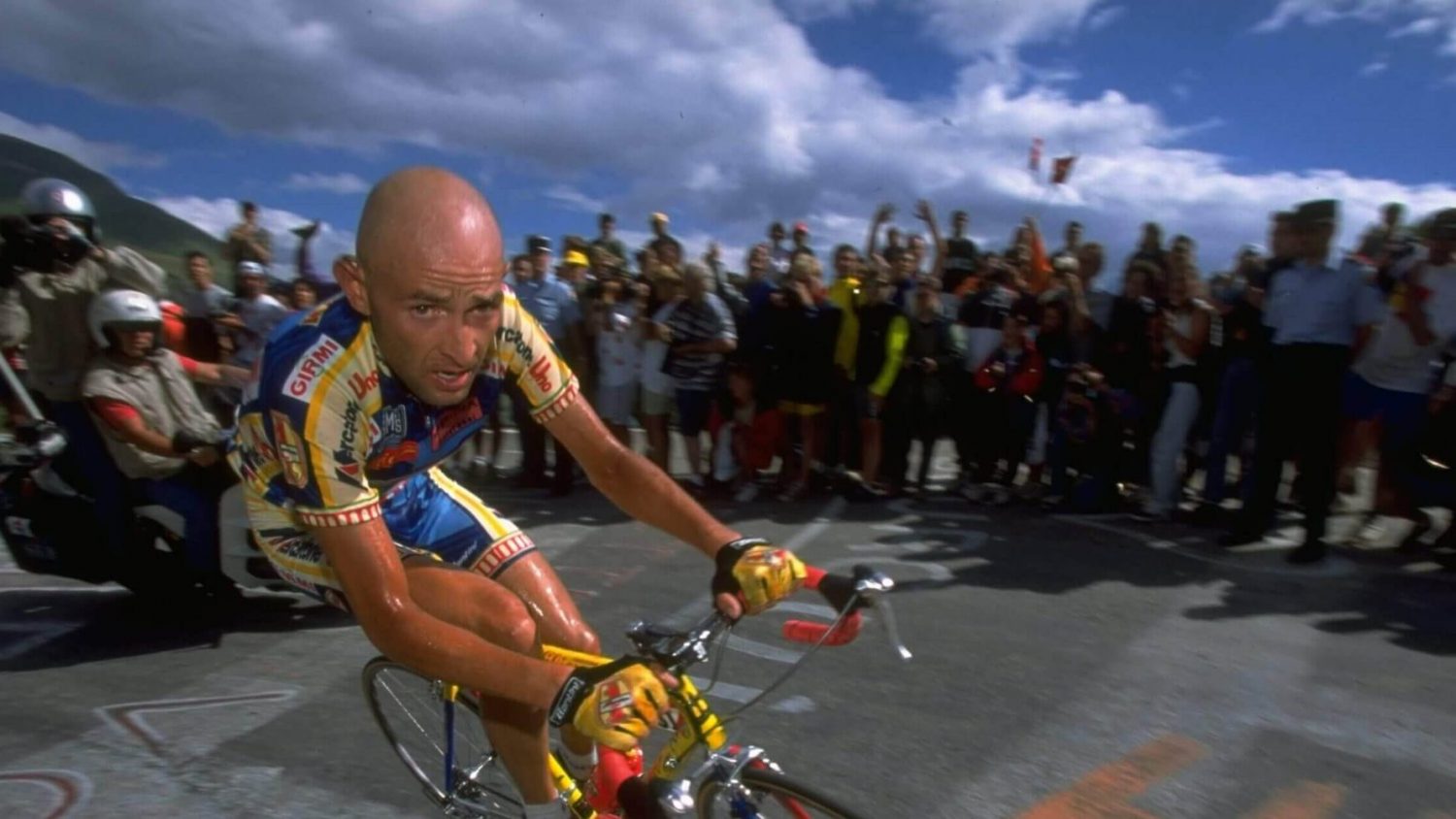
Marco Pantani scaled Alpe d'Huez in 37 minutes and 35 seconds on July 19, 1997. No cyclist has matched that time in the nearly three decades since.
The Italian's fastest ascent came less than two months after he abandoned the Giro d'Italia following a crash on May 24. Few riders have engineered as many career comebacks as Pantani, but his performance that July afternoon in the French Alps stands apart—a technical masterclass executed under conditions that included motorcycle exhaust, enthusiastic fans, and the weight of tactical expectation.
Pantani had targeted the stage from the Tour's start. His Mercatone Uno team controlled the pace as the peloton approached the base of the climb, but Pantani himself waited for the decisive moment. The early hairpins of Alpe d'Huez separate strategy from desperation; attacking too hard at the bottom can unravel an entire effort. Pantani later told French television he had "fell back a bit in the first few kilometers, but once I reached the head of the group, I started to pace myself."
By the 11th hairpin, only four riders remained: yellow jersey Jan Ullrich, polka-dot wearer Richard Virenque, defending Tour champion Bjarne Riis, and Pantani. The little Italian climbed out of the saddle, hands in the drops, using gear ratios—39 x 19, 17, or 16 depending on the gradient—that would perplex modern professionals. Ullrich, seated and muscular, held on initially. Virenque cracked next.
Ullrich, then at the peak of his career and seemingly destined for multiple Tour victories, could hold Pantani's wheel for only a few hundred metres more. The Italian built a lead exceeding 20 seconds, occasionally forced to shove encroaching spectators as the crowd threatened to physically intervene in the race.
Pantani's 37:35 represented 25 seconds faster than his own 1994 effort on the same route and 30 seconds quicker than his 1995 win on the mountain. He had now won on Alpe d'Huez twice, first defeating yellow jersey Miguel Indurain in 1995.
When the 2026 Tour de France route drew announcements in October, the double ascent of Alpe d'Huez across two consecutive stages emerged as the race's most striking feature. Stage 20 presents the traditional route with preparatory climbs; Stage 19 tackles the steeper Col de Sarenne, the backdoor approach prone to landslides. Modern riders will arrive fresher than their 1997 counterparts—advantages of current training methods, nutrition science, and aerodynamic equipment factored in.
Pantani's 37:35 dangles as cycling's most tantalizing sporting benchmark. In a week that saw Josh Kerr break the mile record that had stood since 1999, the question persists: could cycling lose one of its most storied times?
Pantani won only 24 races in his career, but his relationship with Alpe d'Huez transcended numbers. The mountain amplified his peculiar genius—that combination of suffering, tactical instinct, and the ability to hurt himself more than anyone else could hurt him. His record remains untouched because climbing fast uphill, sustained for 37 minutes across 14.5 kilometres, remains one of sport's purest tests of human capacity.
The 2026 Tour riders will chase a ghost.